

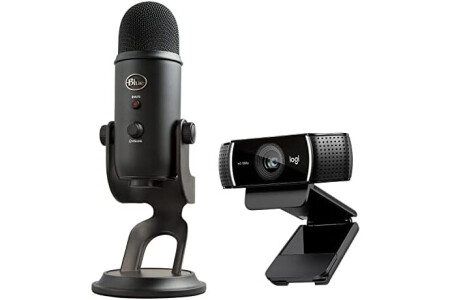
- Show the true professional you are with our #1 USB microphone Yeti and C922x Pro, the ultimate solution for pro video-calls - Yeti’s legendary Blue broadcast audio quality will make you sound incredibly clear during all your meetings - And with C922x Pro webcam’s crisp and vivid video quality, it will be like if you were in the same room as your peers - With Blue VO!CE, block out unwanted noise and craft the perfect vocal sound for your work needs - Cardioid, omni, bidirectional, and stereo pickup patterns allow you to capture sound in multiple ways, whatever the situation - Stream and record vibrant, true to life HD 1080P video at 30FPS/ 720P at 60FPS, with Hyperfast frame rate - Full HD glass lens and premium autofocus deliver razor sharp, clear video in consistent high definition
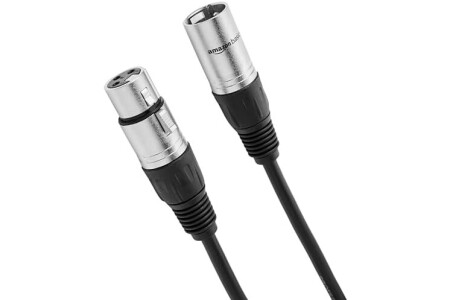
- IN THE BOX: 3-foot XLR male to female microphone cable (2-pack) for XLR-compatible PA systems, speakers, and other sound equipment - CLEAR TRANSMISSION: All-copper conductors with inner copper spiral shielding to reduce noise interference - DURABLE DESIGN: Zinc alloy 3-pin connectors with nickeling; protective metal housing and flexible 6.0mm PVC jacket - USES: Designed for studio recording and live sound
Size: 3 Feet Style: 2-Pack
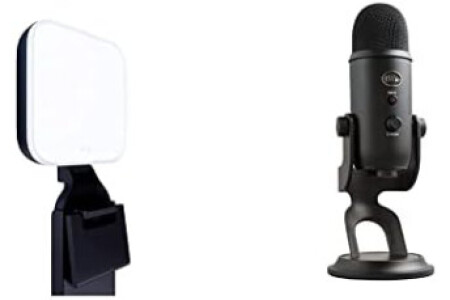
- Natural skin tones, radiant look: Logitech’s TrueSoft technology delivers balanced, full-spectrum LED light with cinematic color accuracy and optimal lighting for video conferencing or Zoom meetings - Wide, flattering light: Litra Glow's frameless diffuser radiates wide, soft light that flatters the subject and eliminates harsh shadows in any setting, providing flawless webcam lighting - Custom Three-Capsule Array: Produces clear, powerful, broadcast-quality sound for YouTube, game streaming, podcasting, Zoom calls and music. - Blue VO!CE Software: Craft the perfect broadcast vocal sound and entertain your audience with enhanced effects, advanced modulation and HD audio samples. Advanced Blue VO!CE is compatible with Yeti, Yeti Nano and Yeti X. To access Blue VO!CE, please download Logitech’s free G HUB software.


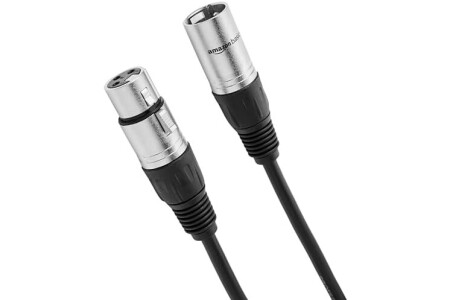
- IN THE BOX: 6-foot XLR male to female microphone cable (2-pack) for XLR-compatible PA systems, speakers, and other sound equipment - CLEAR TRANSMISSION: All-copper conductors with inner copper spiral shielding to reduce noise interference - DURABLE DESIGN: Zinc alloy 3-pin connectors with nickeling; protective metal housing and flexible 6.0mm PVC jacket - USES: Designed for studio recording and live sound
Size: 6 Feet Style: 2-Pack
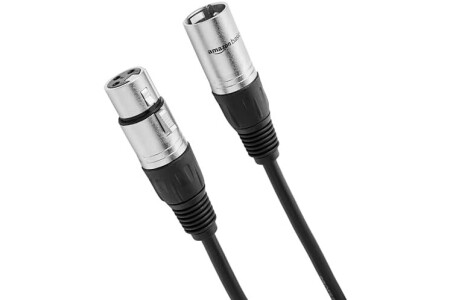
- IN THE BOX: 10-foot XLR male to female microphone cable (2-pack) for XLR-compatible PA systems, speakers, and other sound equipment - CLEAR TRANSMISSION: All-copper conductors with inner copper spiral shielding to reduce noise interference - DURABLE DESIGN: Zinc alloy 3-pin connectors with nickeling; protective metal housing and flexible 6.0mm PVC jacket - USES: Designed for studio recording and live sound
Size: 10 Feet Style: 2-Pack

New (2023) 10th Edition contains many updated techniques, scripts, and tools! It is time to look at OSINT in a different way. For many years, and within previous editions of this book, we have relied on external resources to supply our search tools, virtual environments, and investigation techniques. We have seen this protocol fail us when services shut down, websites disappear, and custom resources are dismantled due to outside pressures. This book aims to correct our dilemma. We will take control of our investigative resources and become self-reliant. There will be no more need for online search tools; we will make and host our own locally. We will no longer seek pre-built virtual machines; we will create and configure our own. This book puts the power back in your hands. The new OSINT professional must be self-sustaining and possess their own tools and resources. You will become a more proficient subject matter expert who will be armed with the knowledge and readiness to articulate the sources of your findings. This new edition contains hundreds of pages which have been updated to keep your OSINT investigative methods fresh, and completely rebuilt digital assets which complement the teachings. Brand-new search methods for Facebook, Instagram, LinkedIn, YouTube, and others ensure you have the latest techniques within your online investigation arsenal. This edition presents six new chapters unavailable within previous versions discussing Broadcast Streams, Application Programming Interfaces, and an entire new section containing chapters about Data Leaks, Data Breaches, Stealer Logs, and Ransomware. An entire section is devoted to Methodology, Workflow, Documentation, and Ethics which provides a clear game plan for your next active investigation. All digital files are included via download, and updated often. Today, we start over.

A New York Times bestselling author and leading expert on market risk argues that seismic shifts in the global economy will trigger a multi-trillion-dollar migration of wealth, outlining new rules of investing for the forward-thinking. “I can’t tell you how much I learned from How to Listen When Markets Speak. The historical perspectives and insights are something every investor needs to know. Buy this book.”—Mark Cuban From Wall Street to the White House, the fantasy of an eventual “return to normal” is still alive and well, nurtured by dangerously outdated theories. But the economic world as we know it—and the rules that govern it—are over. In the coming decade, we’ll witness sustained inflation, a series of sovereign and corporate debt crises, and a thundering of capital out of financial assets into hard assets. Few are prepared. Lawrence G. McDonald, founder of the economic research platform The Bear Traps Report, got a real-world education in market risk when, as a Lehman Brothers VP, he watched the firm ignore flashing warning signs before its collapse. His analysis led him to identify twenty-one indicators for gauging the health of an economy and detecting early signals of opportunity and danger. In How to Listen When Markets Speak, McDonald unveils his unique predictive models, connecting surprising dots between past, present, and future and outlining actionable trading ideas for staying a beat ahead of the markets. Readers will learn: • How disastrous Fed policy will collide with an increasingly fragmented geopolitical landscape to keep U.S. inflation near 3-5% for the next decade • How growing demand for oil and gas, underinvestment in urgently needed energy infrastructure, and cozy Russia–Saudi Arabia relations will lift the base price of energy to historic levels • Why hard assets and rare minerals like lithium and cobalt will outperform growth stocks, U.S. treasuries, and overcrowded passive investment strategies—and how to detect bearish and bullish trends in advance • How passive investing and the vehicles intended to democratize finance have fueled bubbles and ideological skew by large market participants, leaving millions of 401(k)s and IRAs at risk • Why America will likely lose its position as a global superpower and holder of the world’s premier reserve currency, and may be forced to slash Social Security, Medicare, and military spending Rather than merely doomsaying, How to Listen When Markets Speak equips readers to make sense of our current moment, resist reactionary narratives and baseless analysis, and preserve their wealth in turbulent times. When markets speak, it pays to listen.

"He was the most important scholar of privacy since Louis Brandeis."—Jeffrey Rosen In defining privacy as “the claim of individuals…to determine for themselves when, how and to what extent information about them is communicated,” Alan Westin’s 1967 classic Privacy and Freedom laid the philosophical groundwork for the current debates about technology and personal freedom, and is considered a foundational text in the field of privacy law. By arguing that citizens retained control over how their personal data was used, Westin redefined privacy as an individual freedom, taking Justice Louis Brandeis’ 19th century definition of privacy as a legal right and expanding it for use in modern times. Westin’s ideas transformed the meaning of privacy, leading to a spate of privacy laws in the 1970s, as well as prefiguring the arguments over privacy that have come to dominate the internet era. This all new edition of Privacy and Freedom features an introduction by Daniel J. Solove, John Marshall Harlan Research Professor of Law at the George Washington University Law School.

Privacy is a puzzling concept. From the backyard to the bedroom, everyday life gives rise to an abundance of privacy claims. In the legal sphere, privacy is invoked with respect to issues including abortion, marriage, and sexuality. Yet privacy is surrounded by a mire of theoretical debate. Certain philosophers argue that privacy is neither conceptually nor morally distinct from other interests, while numerous legal scholars point to the apparently disparate interests involved in constitutional and tort privacy law. By arguing that intimacy is the core of privacy, including privacy law, Inness undermines privacy skepticism, providing a strong theoretical foundation for many of our everyday and legal privacy claims, including the controversial constitutional right to privacy.
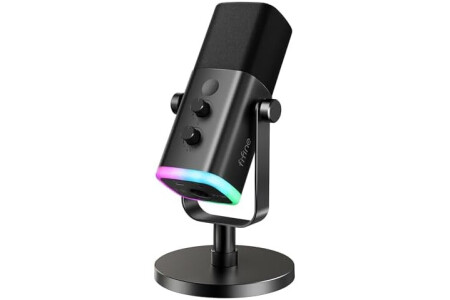
- [Natural Audio Clarity] Operated with frequency response of 50Hz-16KHz, the podcasting XLR mic delivers balanced audio range, likely to resonate with your audience. Directional cardioid dynamic microphone corded will not exaggerate your voice, while rejects unwanted off-axis noise for vocal originality and intelligibility during your PS5 gaming streaming video recording. (Tips: Keep the top of end-addressing XLR dynamic microphone AM8 facing audio source, and suggested recording range is 2 to 6 in.) - [XLR Connection Upgrade-Ability] To use XLR connection, connect the podcast microphone to an audio interface (or mixer) using a separate XLR cable (NOT Included) . Well-connected and smooth operation improves audio flexibility to make you explore various types of music recording singing. The streaming mic isolates the pristine and accurate sound from ambient noise with greater no interference and fidelity. (RGB and function key on mic are INACTIVE when using XLR connection.) - [USB Connection with Handy Mute] Skip the hassle of setting something up and plug the cable to play the dynamic USB microphone directly, which suits for beginner creators or daily podcast. You can quickly control the gamer mic with tap-to-mute that is independent of computer/Macbook programs to keep privacy when live streaming. LED mute reminder helps you get rid of forgetting to cancel the mute. (RGB and function key are only available for USB connection, but NOT for XLR connection) - [Soothing Controllable RGB] RGB ring on the desktop gaming microphone for PC, with 3 modes and more than 10 light colors collection, matches your PC gears accessories for gaming synergy even in dim room. You can control the RGB key button of the dynamic microphone USB directly for game color scheme gaming or live streaming. Configured memory function, the streaming microphone RGB no need to repeated selections after turnning off and brings itself alive when power on. (Only available for USB connection) - [More Function Keys] Computer microphone with headphones jack upgrades your rhythm game experience and gets feedback whether the real-time voice your audience hear as expected. Get the desired level via monitoring volume control when gaming recording. Smooth mic gain knob on the PC microphone gaming has some resistance to the point, easily for audio attenuation or boost presence to less post-production audio. (Only available for USB connection) - [Multiple Scene Use] The XLR/USB PC gaming microphone is a one stop shop to pull duties for both play and work. Use the standing desktop microphone for gaming at home studio or take it on the go. Built-in 3/8’’ and 5/8’’ metal threads, the dynamic XLR microphone fits the most mic stands without external adapter. Noise-canceling windscreen cover defeats hum from nearby electrical appliances for cleaner audio. (It is suggested to connect the mic to the USB-A port of the back of PS5 console.)
Color: Black

There are products from different external stores in your basket, so a wish for each external store will be created.
Note: You will be able to configure each wish individually before publishing it.

 Spanish
(Español)
Spanish
(Español)
 German
(Deutsche)
German
(Deutsche)
 French
(Français)
French
(Français)
 Italian
(Italiano)
Italian
(Italiano)
 Portuguese
(Portugues)
Portuguese
(Portugues)

