


Saber hablar explica con claridad, amenidad y rigor las pautas necesarias para expresar lo que pensamos; facilita la comunicación entre los seres; amplía los procedimientos de generación y precisión de ideas, de documentación y de planificación. Vivimos rodeados de palabras, inmersos en un tráfico constante de expresiones en un mundo que es diálogo por naturaleza. ¿Alguna vez se ha parado a pensar en el poder que le confiere el habla? Un buen discurso es la clave del éxito. Saber hablar reivindica el arte de la comunicación oral, motor de las relaciones interpersonales, sociales, económicas y profesionales, en un tiempo donde impera el dominio del verbo. Hoy más que nunca saber hablar bien es una necesidad. Este libro ofrece la posibilidad de emplear el habla de manera adecuada según el momento y la situación, que pueden ser formales -la consulta del médico, el rectorado de la universidad, una entrevista de trabajo, una junta de vecinos, una exposición comercial- o coloquiales -la familia o los amigos-.

¡Descubre el poder transformador de la concentración mental para llenar tu vida de felicidad y plenitud, de la forma más clara, práctica y accesible! Esta obra te sumergirá en un viaje fascinante hacia el dominio de tu mente, revelándote los secretos de la concentración mental. ¿Qué es y por qué es crucial en nuestro día a día? ¿Qué puede hacer una mente enfocada para ayudarnos a alcanzar la vida de nuestros sueños? Aquí encontrarás respuestas claras y prácticas que cambiarán tu perspectiva para siempre. Aprenderás los beneficios incomparables de la concentración mental en todos los aspectos de tu vida. Por ejemplo, mejorará tu rendimiento en el trabajo y en los estudios, enriquecerás tus relaciones personales y alcanzarás un estado de paz interior. Entenderás por qué vale la pena practicar la concentración de manera regular. Hallarás aquí prácticas probadas y efectivas para desarrollar la concentración, armándote con todo un abanico de técnicas para enfocar tu mente, basadas en la respiración, sonidos, mantras, símbolos y mucho más. Además, descubrirás cómo aplicar paso a paso este poder en las más variadas situaciones cotidianas, llegando a dominarlas: estudiar para un examen, descansar mejor, hablar en público, resolver conflictos, enfrentar desafíos, entre otros. Entenderás exactamente qué estás haciendo, por qué lo estás haciendo y para qué lo haces. ¡Tienes en tus manos la llave que abrirá la puerta hacia una existencia mejor, gracias al control de tu mente! ¡No esperes más para transformar tu vida con el poder de la concentración mental! ¡Aquí encontrarás todas las claves!
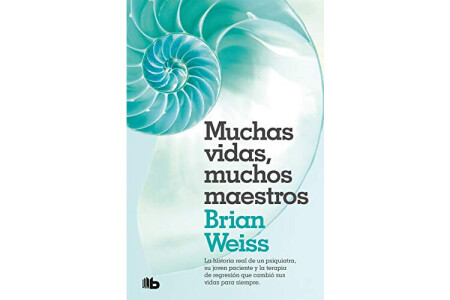
La historia real de un psiquiatra, su joven paciente y la terapia de regresión que cambió sus vidas para siempre. Un punto de encuentro entre ciencia y metafísica. El doctor Brian Weiss, jefe de psiquiatría del hospital Mount Sinai de Miami, relata en éste, su primer libro, una asombrosa experiencia que cambió por completo su propia vida y su visión de la psicoterapia. Una de sus pacientes, Catherine, recordó bajo hipnosis varias de sus vidas pasadas y pudo encontrar en ellas el origen de muchos de los traumas que sufría. Catherine se curó, pero ocurrió algo todavía más importante: logró ponerse en contacto con los Maestros, espíritus superiores que habitan los estados entre dos vidas. Ellos le comunicaron importantes mensajes de sabiduría y de conocimiento. Este relato, profundamente conmovedor, punto de encuentro entre ciencia y metafísica, constituyó un extraordinario best seller y sigue siendo de obligada lectura en un mundo convulsionado, en especial para los que buscan un sentido espiritual. Los mejores comentarios de los lectores sobre Muchas vidas, muchos maestros: «Impactante. Un libro que te obliga a realizar pausas de vez en cuando para asimilar y procesar las experiencias que relata. Tiene la credibilidad de una eminencia en psiquiatría y se asemeja en ocasiones al Libro Tibetano de los muertos pero bajo mi opinión hay aceptar esta información y cogerlo con pinzas ya que ningún hombre a lo largo de la humanidad murióy volvió para contarnos lo que hay en el más allá.» «Interesante lectura incluso para escépticos. He disfrutado su lectura, a pesar de ser muy escéptico sobre estas cuestiones. Habituado a lectura científica, sentía una sana curiosidad por este libro. Quería descubrir si se trataba de una farsa o tenía visos de seriedad y, tras su lectura, no puedo sino recomendarlo. Se puede creer o no lo que en él se describe, eso es cuestión de cada uno, pero sin duda merece la pena su conocimiento.» «Un libro increíblemente interesante. Libro muy fácil de leer y de tremendo impacto. Las cosas que hablan y los temas que abordan deberían ser aprendidos en el colegio. Todo ser humano debería leer este libro y respetar las teorías que mencionan en el. Brian Weiss es sin lugar a dudas un psiquiatra de prestigio que se atreve a abordar temas muy estigmatizados en nuestra época y sociedad actual.»

Libérate de los pensamientos que te atan al pasado y recupera la paz de vivir en el presente. Muchas personas viven atrapadas en recuerdos, decisiones no resueltas, culpas antiguas o nostalgias que condicionan su manera de pensar, sentir y actuar. Creen haber dejado atrás lo vivido, pero siguen reaccionando desde ahí. El pasado ya no existe, pero su huella continúa gobernando la vida emocional. En El reto de soltar el pasado, Xavier Guix analiza con claridad y rigor cómo la memoria construye la historia que nos contamos sobre nosotros mismos y cómo ciertos episodios, creencias o heridas se convierten en auténticas cárceles interiores. No se trata de olvidar lo vivido ni de negarlo, sino de comprender qué lugar ocupa en nuestra vida actual. A partir de su experiencia clínica, Guix disecciona las principales trampas del pasado ―la culpa, el arrepentimiento, el resentimiento, la nostalgia o el victimismo― y propone siete claves concretas para resignificar la experiencia, integrar la historia personal y generar nuevos recuerdos más acordes con quien somos hoy. «Xavier Guix nos sorprende con su maestría y rigor al abordar, como solo él sabe hacerlo, el arte de soltar el pasado». Walter Riso

🎁 BONUS: Actividad extra descargable + Diploma final para celebrar sus logros. ¡APRENDER A ESCRIBIR PUEDE SER DIVERTIDO, PROGRESIVO Y SIN FRUSTRACIONES! 🔥 Ideal para niños de 5 a 7 años. ✅ Apto para escritura con pauta Montessori. 🎨 Con juegos, comprensión lectora y actividades creativas. ❤️ Pensado para disfrutar y avanzar sin presiones. ¿QUÉ NOS DIFERENCIA DE OTROS LIBROS? Que aportamos soluciones reales a los 5 problemas más comunes: 🖍️ ¿Tu hijo se aburre cuando tiene que escribir? ➡️ Este cuaderno transforma la caligrafía en un juego con actividades visuales, dibujos, sopas de letras, frases divertidas y retos diarios. 📚 ¿No sabes cómo ayudarle o qué debe practicar primero? ➡️ Sigue una estructura clara, paso a paso, basada en la pauta Montessori. ¡No necesitas ser experta! ✏️ ¿Te preocupa que no avance con su letra? ➡️ El niño mejora su trazo, coordinación y comprensión de forma natural, con ejercicios progresivos que aumentan su seguridad. ⏳ ¿Tienes poco tiempo para practicar en casa? ➡️ Ejercicios breves que pueden hacerse en 5-10 minutos al día. Perfecto para integrarlo en la rutina sin agobios. 👀 ¿Quieres ver su evolución real sin adivinar? ➡️ Incluye una Hoja de Control exclusiva para padres y educadores, donde puedes anotar el avance diario y valorar su esfuerzo. ¡Una herramienta única que no encontrarás en otros cuadernos! ¿QUÉ ENCONTRARÉIS EN ESTE LIBRO? * 🔵 De la A a la Z. Repaso del abecedario completo. Trazo y escritura de las letras, tanto en mayúscula como en minúscula. Combinación y ligadura para que se vayan familiarizando en el contexto de las palabras. * 🟠 Del 0 al 9. Repaso de las diez cifras. Trazo y escritura de cada una, su nombre escrito en letras y la relación entre el número y la cantidad. * 🟢 Las palabras. Juegos y actividades divertidas y educativas con palabras simples y conocidas por los niños y niñas de estas edades. * 🟡 Las oraciones. Juegos y actividades lúdicas y educativas con frases simples sobre situaciones cotidianas que los niños y niñas de estas edades conocen. * 🔴 Comprensión lectora. Cuentos breves para que lean, entiendan y después respondan las preguntas sobre lo leído. * 🟣 Atención visual. Tras haber trabajado tanto, tienen juegos con dibujos para que se relajen, se diviertan encontrando diferencias y ¡mucho más! ✌️ ¡A DIVERTIRTE! ✌️

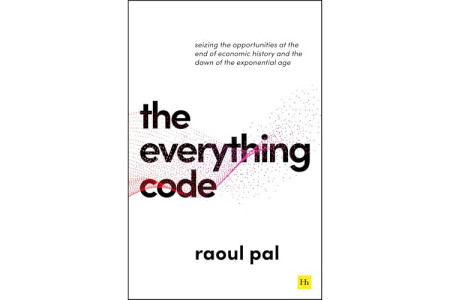
"Nobody connects macro, crypto, and exponential technology quite the way Raoul does." – Peter H. Diamandis, MD, Founder/Chair, XPRIZE, Abundance360, Singularity "This book reads like a long dinner with Raoul." – Micky Malka, Founder and CEO, Ribbit Capital The first book from the globally-renowned investor and founder of Real Vision, as featured onDiary of a CEO. The Everything Code is the result of 30 years of deep thought and analysis by entrepreneur, Raoul Pal that unlocks the secret code to the global economy, financial markets and the trends transforming our society. This book will show you how to thrive in our new Exponential Age so you can secure your future and stay ahead of the curve. Discover why the economic system is broken leading to stagnant wages, rising asset prices and societal inequality. Raoul considers the role of central banks in exacerbating these issues through currency debasement, wealth inequality, and the prioritization of government debt over individual prosperity. This contributes to the growing divide between the rich and the poor, the struggles of younger generations, and the societal consequences of these economic policies. Enter the 'Everything Code:' a groundbreaking framework for understanding predictable economic cycles driven by debt refinancing, explaining how technology and crypto can serve as life rafts in a broken financial system. Packed with actionable insights on how to invest wisely in these transformative times, The Everything Code ensures you can secure your financial future. -- Human-originated and AI-facilitated, this book draws on the author’s archive of speeches, frameworks, and written work using Weave, a secure AI application developed by CHAPTR. Backed by thorough fact-checking and continuous human review to protect creative authority, the text underwent the same rigorous shaping, structuring, and meticulous editing as any Harriman House title - fully adhering to parent publisher Pan Macmillan's AI principles.

The third entry into the New York Times bestselling series, To Challenge Heaven brings another thrilling adventure from the masters of military science fiction, David Weber and Chris Kennedy. In a universe teeming with predators, humanity needs friends. And fast. We've come a long way in the forty years since the Shongairi attacked Earth, killed half its people, and then were driven away by an alliance of humans with the other sentient bipeds who inhabit our planet. We took the technology they left behind, and rapidly built ourselves into a starfaring civilization. Because we haven't got a moment to lose. Because it's clear that there are even more powerful, more hostile aliens out there, and Earth needs allies. But it also transpires that the Shongairi expedition that nearly destroyed our home planet ... wasn't an official one. That, indeed, its commander may have been acting as an unwitting cats-paw for the Founders, the ancient alliance of very old, very evil aliens who run the Hegemony that dominates our galaxy, and who hold the Shongairi, as they hold most non-Founder species, in not-so-benign contempt. Indeed, it may turn out to be possible to turn the Shongairi into our allies against the Hegemony. There's just the small matter of the Shongairi honor code, which makes bushido look like a child's game. We might be able to make them our friends -- if we can crush their planetary defenses in the greatest battle we, or they, have ever seen...
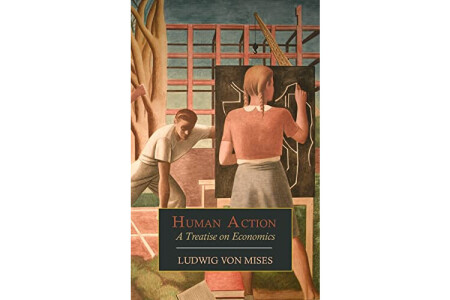
2021 Hardcover Reprint of the 1949 Edition. Exact facsimile of the original edition, not reproduced with Optical Recognition Software. "Human Action: A Treatise on Economics" is the first comprehensive treatise on economics written by a leading member of the modern Austrian school of economics. Von Mises' contribution was very simple, yet at the same time extremely profound: he pointed out that the whole economy is the result of what individuals do. Individuals act, choose, cooperate, compete, and trade with one another. In this way Mises explained how complex market phenomena develop. Mises did not simply describe economic phenomena - prices, wages, interest rates, money, monopoly and even the trade cycle - he explained them as the outcomes of countless conscious, purposeful actions, choices, and preferences of individuals, each of whom was trying as best as he or she could under the circumstances to attain various wants and ends and to avoid undesired consequences. Hence the title Mises chose for his economic treatise, "Human Action."
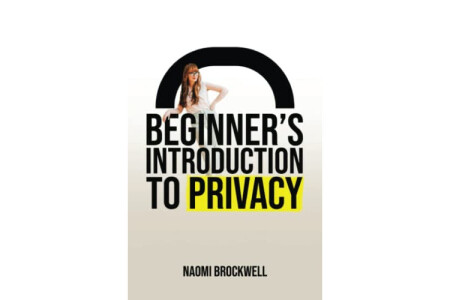
This book is an introduction to privacy in the digital age. There are cracks it today's surveillance systems that can be learnt by privacy-conscious people. This book aims to teach you about some of the highest impact things you can do to begin your privacy journey. It’s important to understand that each layer of privacy you add isn’t bulletproof, but we’ll show you how to layer solutions, to give yourself the best possible chance to maintain your privacy in the digital age. This isn’t a computer science book. We’re not going to dive into the nitty gritty complexities of how computers work. But we are going to give you enough information that you can make more informed decisions in your life. This book is not to persuade you to stop using certain products and services, it’s to make you aware of how these products and services might be harming you, so that you can make your own decision about what’s best for your life. This way we can be more empowered human beings. Empower yourself. Reclaim your privacy in the digital age.
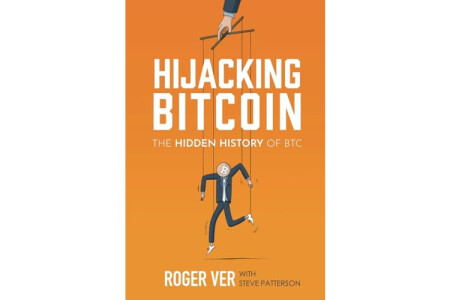
Bitcoin was promised to be a liberating technology, a free market alternative to state-controlled money. But that promise was broken after a small group of insiders took over the project and fundamentally changed Bitcoin's design. Few people know the true history of Bitcoin and its original design due to years of heavy censorship, social media engineering, and tight information controls online. Hijacking Bitcoin destroys the most popular narratives that surround Bitcoin and sets the historical record straight. Roger Ver's passion and pain come through as he tells the story of a beloved project corrupted in front of his eyes. Written by one of the most prominent figures in the cryptocurrency industry, this book is impossible to ignore. From the inside flap: Bitcoin has been captured and changed for the worse. That's the undeniable conclusion of Hijacking Bitcoin. Chocked full of history and inconvenient truths, this book goes on a myth-busting rampage against the most popular narratives that surround BTC. Is Bitcoin truly decentralized? Is it supposed to be digital gold or digital cash? Did the original design really have scaling problems? Roger Ver addresses these questions head-on and provides uncomfortable answers. Roger Ver is the world's first investor in Bitcoin startups and has been a prominent name in the cryptocurrency industry since the beginning. Yet, as he confesses in the introduction, this book is not a love story. It's a devastating exposé of the corruption, propaganda, and centralization of power in Bitcoin.
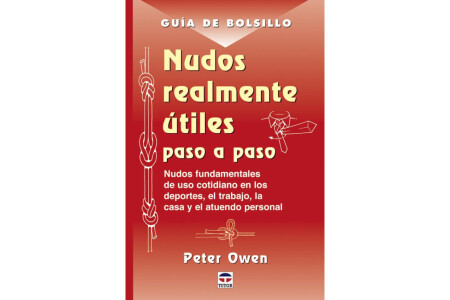
Nudos fundamentales de uso cotidiano en los deportes, el trabaj, la casa… Aprenda a realizar y utilizar los nudos más útiles y prácticos de uso diario en el trabajo, el hogar, el deporte, etc. Escrito sin términos técnicos, esta guía proporciona sencillas instrucciones paso a paso, y presenta de forma muy clara los dibujos de nudos que pueden suplir las necesidades diarias de casi todo el mundo. Este práctico libro ayuda a elegir el nudo adecuado para una tarea concreta y enseña cómo hacerlo bien. También sirve para evitar los posibles problemas y facilitar un poco la vida.

Already famous throughout Europe, this international bestseller plumbs recently opened archives in the former Soviet bloc to reveal the actual, practical accomplishments of Communism around the world: terror, torture, famine, mass deportations, and massacres. Astonishing in the sheer detail it amasses, the book is the first comprehensive attempt to catalogue and analyze the crimes of Communism over seventy years. "Revolutions, like trees, must be judged by their fruit," Ignazio Silone wrote, and this is the standard the authors apply to the Communist experience―in the China of "the Great Helmsman," Kim Il Sung's Korea, Vietnam under "Uncle Ho" and Cuba under Castro, Ethiopia under Mengistu, Angola under Neto, and Afghanistan under Najibullah. The authors, all distinguished scholars based in Europe, document Communist crimes against humanity, but also crimes against national and universal culture, from Stalin's destruction of hundreds of churches in Moscow to Ceausescu's leveling of the historic heart of Bucharest to the widescale devastation visited on Chinese culture by Mao's Red Guards. As the death toll mounts―as many as 25 million in the former Soviet Union, 65 million in China, 1.7 million in Cambodia, and on and on―the authors systematically show how and why, wherever the millenarian ideology of Communism was established, it quickly led to crime, terror, and repression. An extraordinary accounting, this book amply documents the unparalleled position and significance of Communism in the hierarchy of violence that is the history of the twentieth century.

There are products from different external stores in your basket, so a wish for each external store will be created.
Note: You will be able to configure each wish individually before publishing it.

 Spanish
(Español)
Spanish
(Español)
 German
(Deutsche)
German
(Deutsche)
 French
(Français)
French
(Français)
 Italian
(Italiano)
Italian
(Italiano)
 Portuguese
(Portugues)
Portuguese
(Portugues)

