


On the heels of George Carlin's #1 New York Times bestseller Napalm & Silly Putty comes When Will Jesus Bring the Pork Chops? -- infused with Carlin's trademark irreverent humor and biting cultural observations. Here we go again . . . George Carlin's hilarious When Will Jesus Bring the Pork Chops? offers his cutting-edge opinions and observational humor on everything from evasive euphemistic language to politicians to the media to dead people. Nothing and no one is safe! Despite the current climate of political correctness, Carlin is not afraid to take on controversial topics: * Carlin on the media: The media comprises equal parts business, politics, advertising, public relations, and show business. Nice combination. Enough bull for Texas to open a chain of branch offices. * Carlin on the battle of the sexes: Here's all you have to know about men and women: women are crazy, men are stupid. And the main reason women are crazy is that men are stupid. * Carlin on hygiene: When did they pass a law that says the people who make my sandwich have to be wearing gloves? I'm not comfortable with this. I don't want glove residue all over my food; it's not sanitary. Who knows where these gloves have been? * Carlin on evasive language: Just to demonstrate how far using euphemisms in language has gone, some psychologists are now actually referring to ugly people as those with "severe appearance deficits." Hey, Doctor. How's that for "denial"? * Carlin on politics: No self-respecting politician would ever admit to working in the government. They prefer to think of themselves "serving the nation." To help visualize the service they provide the country, you may wish to picture the things that take place on a stud farm. The thinking person's comic who uses words as weapons, Carlin puts voice to issues that capture the modern imagination. For instance, why are there Ten Commandments? Are UFOs real? What will the future really be like? This brand-new collection tackles all that and more. In When Will Jesus Bring the Pork Chops? Carlin's razor-sharp observations demolish everyday values and leave you laughing out loud--delivering exactly what his countless fans have been waiting for.
Since the inception of Bitcoin in 2008, thousands of cryptocurrencies or decentralised blockchains have been launched. Most ventures into the cryptocurrency sphere have not gone according to plan as their founders would have hoped. Nevertheless, there are currently hundreds of crypto related projects which are succeeding. This book covers the history of Peercoin, a decentralised, globally accessible and secure ecosystem for transferring value across the world. Since August 2012, a growing committed and visionary team of developers has been driving the project forward.

“BEST NONFICTION BOOK OF THE 20TH CENTURY.” —Time Volume 1 of the gripping epic masterpiece, this foundational work of Soviet history is Solzhenitsyn’s chilling report of his arrest and interrogation, which exposed to the world the vast bureaucracy of secret police and political repression that haunted Soviet society. Features a new foreword by Anne Applebaum. “The greatest and most powerful single indictment of a political regime ever leveled in modern times.” —George F. Kennan “It is impossible to name a book that had a greater effect on the political and moral consciousness of the late twentieth century.” —David Remnick, The New Yorker “Solzhenitsyn’s masterpiece. . . . The Gulag Archipelago helped create the world we live in today.” —Anne Applebaum, Pulitzer Prize-winning author of Gulag: A History, from the foreword Solzhenitsyn’s “experiment in literary investigation” stands as a towering monument in 20th-century history, offering: * A First-Hand Gulag Memoir: Follow Solzhenitsyn’s own story, from his shocking arrest as a decorated Red Army captain to his brutal interrogation at the hands of the Soviet secret police. * Definitive Soviet History: Based on the testimony of 227 witnesses, this work uncovers the true origins of the concentration camp system, arguing it was essential to the state not just under Stalin, but from the first days of Lenin. * The Bureaucracy of Terror: Journey into the “almost invisible country” of the Gulag, a continent of prisons and camps woven into the fabric of Soviet society and administered by an ever-present secret police. * An Enduring Literary Masterpiece: Discover the book hailed as the “greatest and most powerful single indictment of a political regime ever leveled in modern times,” a work that forever altered the world’s moral consciousness.
WINNER OF THE BAILLIE GIFFORD PRIZE 'A gripping and masterful portrait of the brutal court of Mao, based on new research but also written with great narrative verve' Simon Sebag Montefiore 'Harrowing and brilliant' Ben Macintyre 'A critical contribution to Chinese history' Wall Street Journal Between 1958 and 1962, 45 million Chinese people were worked, starved or beaten to death. Mao Zedong threw his country into a frenzy with the Great Leap Forward, an attempt to catch up with and overtake the West in less than fifteen years. It led to one of the greatest catastrophes the world has ever known. Dikotter's extraordinary research within Chinese archives brings together for the first time what happened in the corridors of power with the everyday experiences of ordinary people, giving voice to the dead and disenfranchised. This groundbreaking account definitively recasts the history of the People's Republic of China.
Join the technological revolution that’s taking the financial world by storm. Mastering Bitcoin is your guide through the seemingly complex world of bitcoin, providing the knowledge you need to participate in the internet of money. Whether you’re building the next killer app, investing in a startup, or simply curious about the technology, this revised and expanded second edition provides essential detail to get you started. Bitcoin, the first successful decentralized digital currency, is still in its early stages and yet it’s already spawned a multi-billion-dollar global economy open to anyone with the knowledge and passion to participate. Mastering Bitcoin provides the knowledge. You simply supply the passion. The second edition includes: * A broad introduction of bitcoin and its underlying blockchain—ideal for non-technical users, investors, and business executives * An explanation of the technical foundations of bitcoin and cryptographic currencies for developers, engineers, and software and systems architects * Details of the bitcoin decentralized network, peer-to-peer architecture, transaction lifecycle, and security principles * New developments such as Segregated Witness, Payment Channels, and Lightning Network * A deep dive into blockchain applications, including how to combine the building blocks offered by this platform into higher-level applications * User stories, analogies, examples, and code snippets illustrating key technical concepts

The shocking story of the legal persecution of Wikileaks founder Julian Assange and the dangerous implications for the whistleblowers of the future. In July 2010, Wikileaks published Cablegate, one of the biggest leaks in the history of the US military, including evidence for war crimes and torture. In the aftermath Julian Assange, the founder and spokesman of Wikileaks, found himself at the center of a media storm, accused of hacking and later sexual assault. He spent the next seven years in asylum in the Ecuadorian embassy in London, fearful that he would be extradited to Sweden to face the accusations of assault and then sent to US. In 2019, Assange was handed over to the British police and, on the same day, the U.S. demanded his extradition. They threatened him with up to 175 years in prison for alleged espionage and computer fraud. At this point, Nils Melzer, UN Special Rapporteur on Torture, started his investigation into how the US and UK governments were working together to ensure a conviction. His findings are explosive, revealing that Assange has faced grave and systematic due process violations, judicial bias, collusion and manipulated evidence. He has been the victim of constant surveillance, defamation and threats. Melzer also gathered together consolidated medical evidence that proves that Assange has suffered prolonged psychological torture. Melzer’s compelling investigation puts the UK and US state into the dock, showing how, through secrecy, impunity and, crucially, public indifference, unchecked power reveals a deeply undemocratic system. Furthermore, the Assange case sets a dangerous precedent: once telling the truth becomes a crime, censorship and tyranny will inevitably follow. The Trial of Julian Assange is told in three parts: the first explores Nils Melzer’s own story about how he became involved in the case and why Assange’s case falls under his mandate as the Special Rapporteur on Torture. The second section returns to 2010 when Wikileaks released the largest leak in the history of the U.S. military, exposing war crimes and corruption, and Nils makes the case that Swedish authorities manipulated charges against Assange to force his extradition to the US and publicly discredit him. In the third section, the author returns to 2019 and picks up the case as Ecuador kicks Assange out of the embassy and lays out the case as it currently stands, as well as the stakes involved for other potential whistleblowers trying to serve the public interest.
Now featuring a new preface by Peter Thiel Two renowned investment advisors and authors of the bestseller The Great Reckoning bring to light both currents of disaster and the potential for prosperity and renewal in the face of radical changes in human history as we move into the next century. The Sovereign Individual details strategies necessary for adapting financially to the next phase of Western civilization. Few observers of the late twentieth century have their fingers so presciently on the pulse of the global political and economic realignment ushering in the new millennium as do James Dale Davidson and Lord William Rees-Mogg. Their bold prediction of disaster on Wall Street in Blood in the Streets was borne out by Black Tuesday. In their ensuing bestseller, The Great Reckoning, published just weeks before the coup attempt against Gorbachev, they analyzed the pending collapse of the Soviet Union and foretold the civil war in Yugoslavia and other events that have proved to be among the most searing developments of the past few years. In The Sovereign Individual, Davidson and Rees-Mogg explore the greatest economic and political transition in centuries—the shift from an industrial to an information-based society. This transition, which they have termed "the fourth stage of human society," will liberate individuals as never before, irrevocably altering the power of government. This outstanding book will replace false hopes and fictions with new understanding and clarified values.
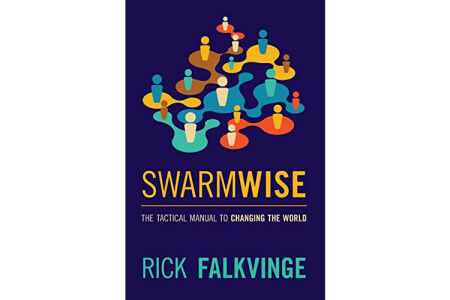
Swarmwise (2013) is a tactical guide to changing the world using cost-efficient swarm methodology. It is a leadership handbook that outlines how the Swedish Pirate Party was able to beat the political competition on less than one percent of their budget, and shows how any cash- and time-strapped executive or manager can use swarm methodologies, whether the goal is business, social, or political. That organization, founded by one man without resources, has now spread to over 70 countries using the same cost-efficient swarm methods. Swarmwise will tell you what it takes to found a swarm of volunteers, to organize and energize it, and to lead it to success. The book doesn’t go into theoretical detail, psychology, or deep research papers. Rather, it is very hands-on leadership advice from pure experience – it covers everything from how you give instructions to new marketing assistants or activists about handing out flyers in the street, up to and including how you communicate with TV stations and organize hundreds of thousands of people in a coherent swarm. Above all, it focuses on the cost-efficiency of the swarm structure, and is a tactical instruction manual for anybody who wants to dropkick their competition completely – no matter whether their game is business, social, or political. A chapter overview of Swarmwise: Chapter 1 - Understanding the Swarm deals with the basic concepts of a swarm organization, and explains why the swarm is open and transparent. It introduces the concept of a cost-efficiency advantage of two orders of magnitude. In Chapter 2 - Launching Your Swarm, we learn that the published project plan must be tangible, credible, inclusive, and epic, and what that means in practice. Chapter 3 - Getting Your Swarm Organized gives tangible advice on how to organize a volunteer organization and why. We look at the dynamics of different group sizes and how to build a culture of trust. One of the more counterintuitive lessons is detailed in Chapter 4 - Control the Vision, but Never the Message. It explains how you need to use volunteers to translate your vision into messages that fit a specific social context, rather than using an one-size-fits-all slogan. A healthy dose of classic project management is found in Chapter 5 - Keep People's Eyes On Target, And Paint It Red Daily. We talk about metrics, choosing the right metrics, and causing self-organization to happen when you publish the right metrics to optimize. In Chapter 6 - Screw Democracy, We're on a Mission from God, we talk about conflict resolution mechanisms and how to optimize the swarm for speed, trust, and scalability. Chapter 7 - Surviving Growth Unlike Anything the MBAs Have Seen details how the swarm can grow by 200% in a week when some events play out, and how to handle such situations. One of the more advanced chapters, Chapter 8 - Using Social Dynamics To Their Potential goes into how we can tap into the long tail of people and effectively cross-use online and offline friendships to grow organically. Seeing how most organizations need to deal with TV, newspapers, and radio, there is also Chapter 9 - Managing Oldmedia that details everything from press release processes to TV crews. Finally, Chapter 10 - Beyond Success shares a bit of experience of what happens when you feel at the top of the world, and what to do then. "Your most valuable asset isn't your employees," I told the executive. "Your most valuable asset is the thousands of people who want to work for you for free, and you don't let them." The book can also be downloaded as a PDF from the author's website at http://falkvinge.net/books/.
Principles of Economics is a university-level textbook offering a comprehensive, engaging, and easy-to-read overview of the field of economics that is valuable to the university student, the general reader, and the professional economist. Saifedean Ammous’ first book, The Bitcoin Standard, is an international best-seller that has been translated into 37 languages. The book garnered praise from respected scholars, successful entrepreneurs, professional athletes, and countless readers worldwide for its engaging and enlightening presentation of sophisticated economic and technical concepts, delivered in a style accessible to the general reader. With its sequel, The Fiat Standard, Ammous established himself as one of the world’s most effective communicators of economic ideas, whose writing resonates with a growing global readership. In Principles of Economics, his most ambitious and elaborate work to date, Ammous offers readers a potent antidote to the modern economics textbook. After two decades of learning and teaching economics at university level, Ammous became aware that most economic textbooks confuse more than they illuminate and most university students tasked with reading them learn very little that is useful and actionable. The culmination of four years' work, this book uses the underappreciated approach of the Austrian school of economics to introduce the principles, methods, and concepts of economics in a readable, engaging, and informative manner. Rather than relying on mathematical analysis of aggregates and arcane theoretical models, the book uses the clear written word to effectively illustrate key economic concepts. The book first presents the Austrian school method and the foundational concepts of value and time. With these foundations laid, the second part of the book explores how humans act individually to achieve their ends under scarcity—in other words, how humans economize. A chapter is dedicated to detailed overviews of labor, property, capital, technology, and energy, and each topic is accompanied by vivid examples explaining its relevance to the reader. The third part of the book examines economizing in the social context, with chapters examining trade, money, the market order, and capitalism—important concepts that are often shrouded by misconceptions in most modern treatments. The fourth part of the book presents the Austrian perspective on monetary economics, laying the groundwork through a detailed discussion of time preference, followed by a discussion of banking and credit, and the business cycle and its monetary origins. The final section of the book explains why respect for property rights in an extended market order is the basis for human civilization, how the market order protects against aggression, and the failures of monopoly provision of defense.
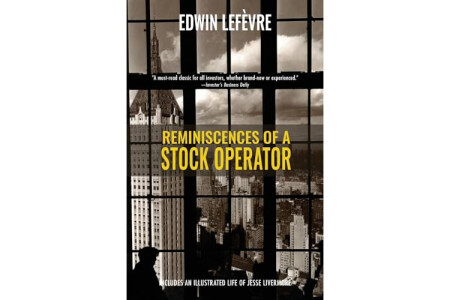
Edwin Lefèvre’s Reminiscences of a Stock Operator is a fictionalized autobiography based on the life of Jesse Livermore (1877–1940) who was a pioneer of day trading and one of the greatest investors of all time. At his peak in 1929, Livermore was worth $100 million, which in today’s dollars roughly equates to $1.5 billion, making him one of the richest people in the world at that time. The book, which began as a series of articles published during 1922 and 1923 in The Saturday Evening Post, tells the story of Livermore’s progression from day trading in the then so-called “bucket shops” to market speculator, market maker, and market manipulator to Wall Street “Boy Plunger” where he won and lost tens of millions of dollars. This classic of American business writing continues to offer sharp insights into the art and psychology of trading and speculation. It is one of the most widely read, highly recommended investment books of all time. This Warbler Classics edition includes an illustrated life of Jesse Livermore. Edwin Lefèvre (1871–1943) was an American journalist, writer, and diplomat who is most noted for his writings about Wall Street, most notably Reminiscences of a Stock Operator (1923). He began his career as a journalist and eventually became a stockbroker as well. Edwin Lefèvre’s first short stories were published under the title, Wall Street Stories (1901), which were followed by several novels about money and finance. Lefèvre was appointed an Ambassador of the United States by President Howard Taft in 1909, serving in posts in Italy, France, and Spain. In 1913, Lefévre returned to his home in Vermont where he resumed writing novels and contributing short stories for magazines such as The Saturday Evening Post and McClure’s. “A must-read classic for all investors, whether brand-new or experienced.” —Investor’s Business Daily “Although...first published some seventy years ago, its take on crowd psychology and market timing is as timely as last summer’s frenzy on the foreign exchange markets.” —Worth magazine

Economics is a science. It primarily examines how decisions are made, which alternatives provide greatest benefits to various stakeholders. Contrary to popular belief, economics is not about money. It has and continues to be about the study of allocation of scarce resources (behaviours). We enforce them through incentives and disincentives (punishments).You don’t need to be an economist or technologist to understand the book. We keep things high-level to digest the information, yet coming from fundamental academic research.The difference between economics (soft science) and physics (hard science) is that economics is continuously evolves because it is a study of human behaviours. As we moved from Web 1 to Web 2 and now Web 3, the economics 101 that we initially understood has changed.While is important to be coding the tech infrastructure of Web 3.0 and having ideas of what Web 3.0 is like, an important aspect is the economics and incentive alignment of Web 3.0 users. It is easy to create a token or currency out of thin air. The token is only valuable when the economics make sense.The aim of this book is to dive into the core foundational principles of economics in Web 3.0. We explore the evolution to economics, the change in principles we learnt in Econs 101, and the new environment that economics will exist in.Then, we explore ways to apply these foundational principles in Web 3.0, with or without a token. We also tap into the general mathematics that defines the economic mechanisms.
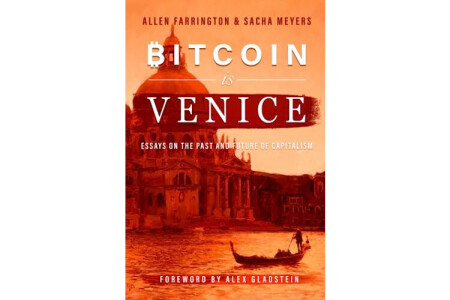
What if the world's economic problems are not the result of bad policies—but of a fundamentally broken monetary system? In Bitcoin Is Venice, Allen Farrington and Sacha Meyers challenge the assumptions underpinning modern economics, finance, and fiat currency. Drawing on history, political economy, philosophy, and Bitcoin, they present a provocative vision of how sound money could transform capital formation, human cooperation, and the future of civilization itself. Far more than a book about cryptocurrency, Bitcoin Is Venice explores how societies create wealth, how institutions evolve, and why monetary systems shape everything from innovation and entrepreneurship to culture and individual freedom. Through a series of deeply researched and thought-provoking essays, Farrington and Meyers examine: • The failures and contradictions of modern economic theory • The hidden costs of fiat currency systems • The relationship between money, capital, and human progress • How Bitcoin changes incentives throughout society • The future of entrepreneurship, investment, and wealth creation • Whether a Bitcoin standard could usher in a new era of prosperity and innovation Building on ideas from economics, history, technology, and political philosophy, the authors offer a framework for understanding Bitcoin not merely as a digital asset, but as a transformative monetary technology with far-reaching implications for the modern world. Featuring a foreword by human rights advocate Alex Gladstein and praised by leading thinkers including Jeff Booth and Harris Irfan, Bitcoin Is Venice presents a compelling exploration of money, freedom, and the foundations of a flourishing society. All profits from the sale of this book are donated to the Human Rights Foundation. Whether you're an investor, entrepreneur, economist, policymaker, or simply curious about the future of money, Bitcoin Is Venice offers a challenging and insightful perspective on one of the most important innovations of the twenty-first century. Discover why Bitcoin may be about far more than finance—and what that could mean for the future of civilization.

There are products from different external stores in your basket, so a wish for each external store will be created.
Note: You will be able to configure each wish individually before publishing it.

 Spanish
(Español)
Spanish
(Español)
 German
(Deutsche)
German
(Deutsche)
 French
(Français)
French
(Français)
 Italian
(Italiano)
Italian
(Italiano)
 Portuguese
(Portugues)
Portuguese
(Portugues)

