

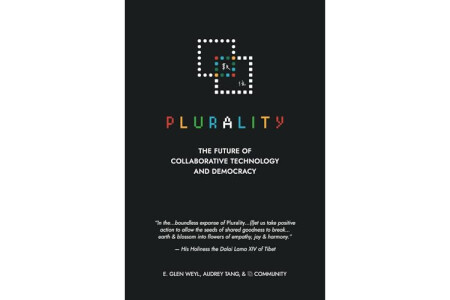
In the vast, boundless expanse of Plurality, each life is a unique and precious existence...Regardless of how perilous external circumstances may be...(l)et us take positive action to allow the seeds of shared goodness to break through the earth and blossom into flower of empathy, joy and harmony. — His Holiness the Dalai Lama XIV of Tibet In a technologically advanced, politically challenging, and rapidly evolving 21st century, what does a free and open future look like? Glen, Audrey and their coauthors offer a compelling view of a way forward. — Vitalik Buterin, Founder of Ethereum Democracy has been a confrontation between opposing values. In Taiwan, however, it has become a conversation among a diversity of values. Audrey Tang has shown us how to create a "digital democracy" that transcends the constraints of ideology - that is the major contribution of this book. — Tsai Ing-wen, President of the ROC (Taiwan) They offer us a portal into a future where technology supports democracy, pluralism, and broad human flourishing. We know this future is possible because Tang has been building it in Taiwan. The conceptual foundations laid here usher in a much-needed paradigm change for modern life. — Danielle S. Allen, political philosopher, James Bryant Conant University Professor at Harvard, MacArthur Fellow, and author of Our Declaration and Cuz Plurality reads like optimistic sci-fi, already happening in real life! Can democracies around the world follow in Taiwan’s footsteps to upgrade free society for the digital age? Fingers crossed for a happy ending. — Joseph Gordon-Levitt, Emmy-winning artist and founder of HITRECORD Digital technology threatens to tear free and open societies apart through polarization, inequality, and loneliness. But in the decade since the weekslong occupation of their parliament, a diverse island of resilience has shown another way is possible. Taiwan achieved inclusive, technology-fueled growth, overcame the pandemic without lockdowns and the infodemic without takedowns, entrusted its people to tackle shared challenges like environmental protection while capitalizing on a culture of innovation to “hack the government.” Here, the architects of Taiwan’s internationally acclaimed digital democracy share the secret of their success. Plurality (symbolized ⿻) harnesses digital tools not to replace humans or trust, but to channel the potential energy in social diversity that can erupt in conflict instead for progress, growth and beauty. From intimate digitally empowered telepathy to global trade running on social networks rather than money, ⿻ offers tools to radically enrich relationships while leaving no one behind. ⿻ thus promises to transform every sector from healthcare to media, as illustrated by the way it has been written: as a chorus of open, self-governing collaboration of voices from around the globe. Their work in public on this openly available text shows — as well as tells — how everyone from a devout African farmer to a Hollywood celebrity can help build a more dynamic, harmonious and inclusive world. E. Glen Weyl is Founder of RadicalxChange, Microsoft Research's Plural Technology Collaboratory, & Plurality Institute & co-author of Radical Markets. Audrey Tang is the inaugural Minister of Digital Affairs in Taiwan & the inaugural ⚧️ minister in the 🌐. A global ⿻ community of dozens collaborated to create this first-ever open-source self-governed book harnessing tools described within. You are invited to join us at https://www.plurality.net
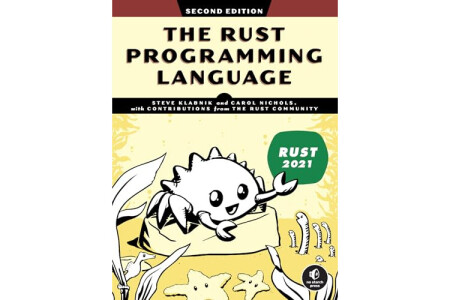
With over 50,000 copies sold, The Rust Programming Language is the quintessential guide to programming in Rust. Thoroughly updated to Rust’s latest version, this edition is considered the language’s official documentation. The Rust Programming Language "covers everything you could want to know about the language."—Stack Overflow Rust has been repeatedly voted "Most Loved Language" on the StackOverflow Developer Survey. The Rust Programming Language, 2nd Edition is the official guide to Rust 2021: an open source systems programming language that will help you write faster, more reliable software. Rust provides control of low-level details along with high-level ergonomics, allowing you to improve productivity and eliminate the hassle traditionally associated with low-level languages. Klabnik and Nichols, alumni of the Rust Core Team, share their knowledge to help you get the most out of Rust’s features so that you can create robust and scalable programs. You’ll begin with basics like creating functions, choosing data types, and binding variables, then move on to more advanced concepts, such as: * Ownership and borrowing, lifetimes, generics, traits, and trait objects to communicate your program’s constraints to the compiler * Smart pointers and multithreading, and how ownership interacts with them to enable fearless concurrency * How to use Cargo, Rust’s built-in package manager, to build, document your code, and manage dependencies * The best ways to test, handle errors, refactor, and take advantage of expressive pattern matching In addition to the countless code examples, you’ll find three chapters dedicated to building complete projects: a number-guessing game, a Rust implementation of a command line tool, and a multithreaded server.
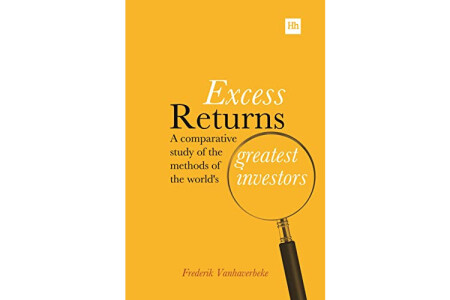
An analysis of the investment approach of the world's top investors, showing how to achieve market-beating returns It is possible to beat the market. Taking this as a starting point, Excess Returns sets out to explore how exactly the most famous investors in the world have done it, year after year, sometimes by huge margins. Excess Returns is not a superficial survey of what investors have said about what they do. Rather, Frederik Vanhaverbeke applies a forensic analysis to hundreds of books, articles, letters and speeches made by dozens of top investors over the last century and synthesises his findings into a definitive blueprint of how exactly these investment legends have gone about their work. Among the legends whose work has been studied are Warren Buffett, Benjamin Graham, Anthony Bolton, Peter Lynch, Charles Munger, Joel Greenblatt, Seth Klarman, David Einhorn, Daniel Loeb, Lou Simpson, Prem Watsa and many more. Among the revealing insights, you will learn of the striking similarities in the craft of great investors, crucial subtleties in their methods that are ignored by many, and the unconscious errors investors commonly make and how these are counter to successful investing. Special attention is given to two often overlooked areas: effective investment philosophy and investment intelligence. The investing essentials covered include: - Finding bargain shares - Making a quantitative and qualitative business analysis - Valuation methods - Investing throughout the business cycle - Timing buy and sell decisions - And much, much more! Excess Returns is full of timeless and practical insights, presented in a unique style, to help investors focus on the most promising opportunities and lead the way to beating the market.
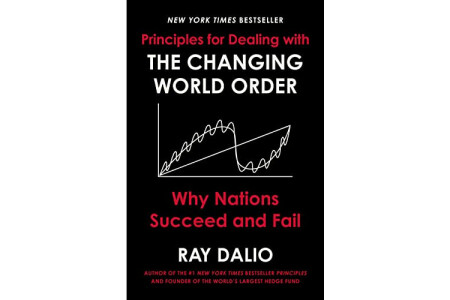
NEW YORK TIMES BESTSELLER * MORE THAN ONE MILLION COPIES SOLD “A provocative read...There are few tomes that coherently map such broad economic histories as well as Mr. Dalio’s. Perhaps more unusually, Mr. Dalio has managed to identify metrics from that history that can be applied to understand today.” —Andrew Ross Sorkin, The New York Times From legendary investor Ray Dalio, author of the #1 New York Times bestseller Principles, who has spent half a century studying global economies and markets, Principles for Dealing with the Changing World Order examines history’s most turbulent economic and political periods to reveal why the times ahead will likely be radically different from those we’ve experienced in our lifetimes—and to offer practical advice on how to navigate them well. A few years ago, Ray Dalio noticed a confluence of political and economic conditions he hadn’t encountered before. They included huge debts and zero or near-zero interest rates that led to massive printing of money in the world’s three major reserve currencies; big political and social conflicts within countries, especially the US, due to the largest wealth, political, and values disparities in more than 100 years; and the rising of a world power (China) to challenge the existing world power (US) and the existing world order. The last time that this confluence occurred was between 1930 and 1945. This realization sent Dalio on a search for the repeating patterns and cause/effect relationships underlying all major changes in wealth and power over the last 500 years. In this remarkable and timely addition to his Principles series, Dalio brings readers along for his study of the major empires—including the Dutch, the British, and the American—putting into perspective the “Big Cycle” that has driven the successes and failures of all the world’s major countries throughout history. He reveals the timeless and universal forces behind these shifts and uses them to look into the future, offering practical principles for positioning oneself for what’s ahead.
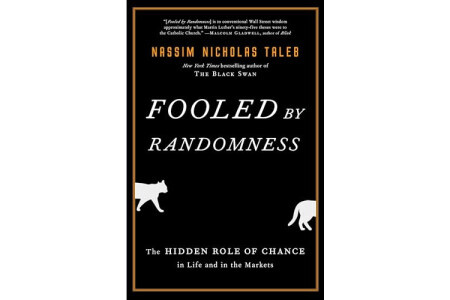
Fooled by Randomness is a standalone book in Nassim Nicholas Taleb’s landmark Incerto series, an investigation of opacity, luck, uncertainty, probability, human error, risk, and decision-making in a world we don’t understand. The other books in the series are The Black Swan, Antifragile, Skin in the Game, and The Bed of Procrustes. Now in a striking new hardcover edition, Fooled by Randomness is the word-of-mouth sensation that will change the way you think about business and the world. Nassim Nicholas Taleb–veteran trader, renowned risk expert, polymathic scholar, erudite raconteur, and New York Times bestselling author of The Black Swan–has written a modern classic that turns on its head what we believe about luck and skill. This book is about luck–or more precisely, about how we perceive and deal with luck in life and business. Set against the backdrop of the most conspicuous forum in which luck is mistaken for skill–the world of trading–Fooled by Randomness provides captivating insight into one of the least understood factors in all our lives. Writing in an entertaining narrative style, the author tackles major intellectual issues related to the underestimation of the influence of happenstance on our lives. The book is populated with an array of characters, some of whom have grasped, in their own way, the significance of chance: the baseball legend Yogi Berra; the philosopher of knowledge Karl Popper; the ancient world’s wisest man, Solon; the modern financier George Soros; and the Greek voyager Odysseus. We also meet the fictional Nero, who seems to understand the role of randomness in his professional life but falls victim to his own superstitious foolishness. However, the most recognizable character of all remains unnamed–the lucky fool who happens to be in the right place at the right time–he embodies the “survival of the least fit.” Such individuals attract devoted followers who believe in their guru’s insights and methods. But no one can replicate what is obtained by chance. Are we capable of distinguishing the fortunate charlatan from the genuine visionary? Must we always try to uncover nonexistent messages in random events? It may be impossible to guard ourselves against the vagaries of the goddess Fortuna, but after reading Fooled by Randomness we can be a little better prepared. PRAISE FOR FOOLED BY RANDOMNESS: Named by Fortune One of the Smartest Books of All Time A Financial Times Best Business Book of the Year “[Fooled by Randomness] is to conventional Wall Street wisdom approximately what Martin Luther’s ninety-five theses were to the Catholic Church.” –Malcolm Gladwell, author of Blink “The book that rolled down Wall Street like a hand grenade.” –Maggie Mahar, author of Bull! A History of the Boom, 1982—1999 “Fascinating . . . Taleb will grab you.” –Peter L. Bernstein, author of Capital Ideas Evolving “Recalls the best of scientist/essayists like Richard Dawkins . . . and Stephen Jay Gould.” –Michael Schrage, author of Serious Play: How the World’s Best Companies Simulate to Innovate “We need a book like this. . . . Fun to read, refreshingly independent-minded.” –Robert J. Shiller, author of Irrational Exuberance “Powerful . . . loaded with crackling little insights [and] extreme brilliance.” –National Review
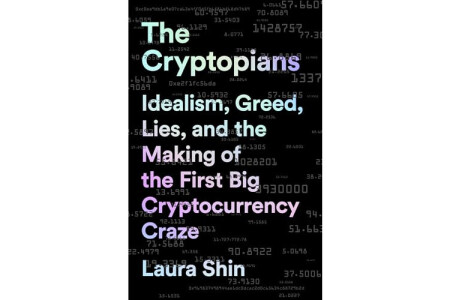
The story of the idealists, technologists, and opportunists fighting to bring cryptocurrency to the masses. In their short history, Bitcoin and other cryptocurrencies have gone through booms, busts, and internecine wars, recently reaching a market valuation of more than $2 trillion. The central promise of crypto endures—vast fortunes made from decentralized networks not controlled by any single entity and not yet regulated by many governments. The recent growth of crypto would have been all but impossible if not for a brilliant young man named Vitalik Buterin and his creation: Ethereum. In this book, Laura Shin takes readers inside the founding of this novel cryptocurrency network, which enabled users to launch their own new coins, thus creating a new crypto fever. She introduces readers to larger-than-life characters like Buterin, the Web3 wunderkind; his short-lived CEO, Charles Hoskinson; and Joe Lubin, a former Goldman Sachs VP who became one of crypto’s most well-known billionaires. Sparks fly as these outsized personalities fight for their piece of a seemingly limitless new business opportunity. This fascinating book shows the crypto market for what it really is: a deeply personal struggle to influence the coming revolution in money, culture, and power.
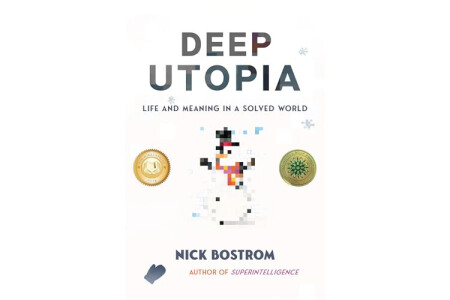
Bostrom’s last book, Superintelligence: Paths, Dangers, Strategies (OUP, 2014), sparked a global conversation on AI that continues and widens to this day. That book, which despite its academic style became a New York Times bestseller, focused on what would happen if AI goes wrong. But what if AI goes right? Suppose we succeed in developing superintelligence safely and that we make good use of the almost magical powers this unlocks. We would then achieve full unemployment. More than that, we would transition into a “post-instrumental condition," in which human effort is not needed for any practical purpose. This would be a condition of material abundance. Human nature itself would become fully malleable. In such a solved world, what would be the point of human existence? What could give meaning to our lives? Which old values will we have to sacrifice, and which new values will we be able to realize to wonderful degrees? Deep Utopia—a work that is again years ahead of its time—takes the readers on a journey into some of the most profound questions that arise as we dissolve the limits of our current mode of being. It is a lush, playful, difficult, and human text that interleaves fiction stories and philosophical lectures that show us a glimpse of a different kind of existence–one that might be ours in the not-so-distant future. Winner of 7 Book Awards! 2024 AMERICAN LEGACY BOOK AWARDS WINNER 2024 LIVING NOW BOOK AWARD EVERGREEN GOLD MEDAL WINNER 2024 PENCRAFT BOOK AWARDS 1ST PLACE WINNER

- Multifaceted Microphone: The RE20 dynamic cardioid microphone is truly an industry standard, a firm favorite for broadcasting, podcasting, and sound engineering worldwide - Venturing into Music: Its popularity also extends into music production as a premium grade instrument microphone - Smartly Built: Its Variable-D design and heavy-duty internal pop filter excel for close-in voice work, while an internal element shock-mount reduces vibration-induced noise - Voice Changer: The RE20 Microphone can create the classic sound of FM radio voices - What’s Inside: It contains a large diaphragm dynamic element and humbucking coil guards against line hum, along with a mid-bass tone-shaping switch
Color: Gray
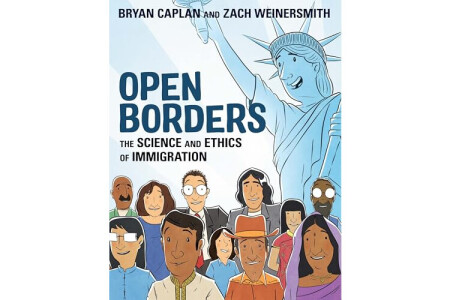
Economist Bryan Caplan makes a bold case for unrestricted immigration in this fact-filled graphic nonfiction. American policy-makers have long been locked in a heated battle over whether, how many, and what kind of immigrants to allow to live and work in the country. Those in favor of welcoming more immigrants often cite humanitarian reasons, while those in favor of more restrictive laws argue the need to protect native citizens. But economist Bryan Caplan adds a new, compelling perspective to the immigration debate: He argues that opening all borders could eliminate absolute poverty worldwide and usher in a booming worldwide economy―greatly benefiting humanity. With a clear and conversational tone, exhaustive research, and vibrant illustrations by Zach Weinersmith, Open Borders makes the case for unrestricted immigration easy to follow and hard to deny.
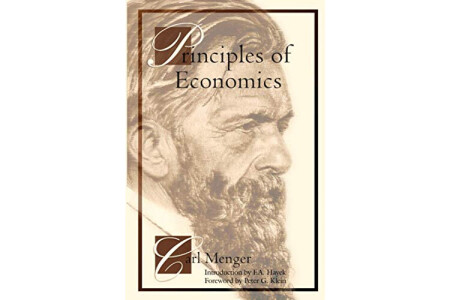
In the beginning, there was Menger. It was his Principles of Economics that reformulated — and really rescued — economic science from the theoretical errors of the old classical school.Menger set out to elucidate the precise nature of economic value, and to root economics firmly in the real-world actions of individual human beings. In Principles of Economics, he advances the theory that the marginal utility of goods is the source of their value, rather than the labor inputs that went into making them. The implication of this theory is that the individual mind is the source of economic value — a point that touched off the marginalist revolution and started a departure from the flawed classical view of economics.For this reason, Carl Menger (1840–1921) is considered to be the founder of the Austrian School of economics. Principles of Economics is the book that Ludwig von Mises said turned him into a real economist. What's striking is how, nearly a century and a half later, the book still retains the incredible power of both its prose and its relentless logic.The Mises Institute's new edition features a new foreword by Peter G. Klein, which summarizes Menger's contribution and places him in the history of ideas. Klein also explains Menger's continued relevance in present times. F.A. Hayek contributes the introduction.Economics students still say that it is the best introduction to economic logic ever written. The book also deserves the status of a seminal contribution to science in general. Truly, no one can claim to be well read in economics without having mastered Menger's argument.To search for Mises Institute titles, enter a keyword and LvMI (short for Ludwig von Mises Institute); e.g., Depression LvMI

“Stasiland demonstrates that great, original reporting is still possible. . . . A heartbreaking, beautifully written book. A classic.” — Claire Tomalin, Guardian “Books of the Year” Winner of the Samuel Johnson Prize for Non-Fiction: a powerfully moving account of people who heroically resisted the communist dictatorship of East Germany, and of people who worked for its secret police, the Stasi. Anna Funder delivers a prize-winning and powerfully rendered account of the resistance against the German Democratic Republic’s communist dictatorship in these harrowing, personal tales of life behind the Iron Curtain—and, especially, of life under the iron fist of the Stasi, East Germany’s brutal state security force in one of history's most notorious surveillance states. In the tradition of Frederick Taylor’s The Berlin Wall and Philip Gourevitch’s We Wish to Inform You That Tomorrow We Will be Killed With Our Families, Funder’s Stasiland is a masterpiece of investigative reporting and a vital work of twentieth-century history, written with novelistic vividness and the compelling intensity of a universal, real-life story. Through meticulous reporting, Funder reveals the haunting reality of life in the GDR―a world of quiet heroes, conflicted enforcers, and the ghosts left behind by a fallen state. * A Chilling Surveillance State: Delve into the inner workings of the Stasi, a secret police force that used everything from collecting “smell samples” in jars to a vast network of informers to control the populace. * Unforgettable True Stories: Meet Miriam, who became an Enemy of the State at sixteen for distributing leaflets, and Frau Paul, who made an impossible choice to protect a stranger at the cost of seeing her own critically ill child. * Life Behind the Berlin Wall: Experience the strange, often absurd reality of the German Democratic Republic, a country that no longer exists but whose secrets still haunt the present day. * The Perpetrators’ Perspective: Hear directly from the men who served the regime, from professors who taught the art of recruiting informers to the officer who physically painted the line where the Wall would be built.

As technology surges forward, our world teeters on the precipice of a significant shift in global finance. The imminent threat? Central Bank Digital Currencies (CBDCs), which are government-controlled digital currencies that provide authorities with unparalleled power to surveil, control, and manipulate the financial existence of billions. In "The Final Countdown: Crypto, Gold, Silver, and the People's Last Stand Against Tyranny by Central Bank Digital Currencies (CBDCs)," author and 2024 Presidential Candidate, Aaron Day, embarks on an urgent exploration of a global tyrannical crisis in the making. This is not merely a book; it's a compelling call to action and a survival guide for the digital age." The Final Countdown" navigates this chilling landscape, paralleling dystopian visions of a world dominated by CBDCs with disturbing realities in today's societies. Through a series of riveting examples and eye-opening revelations, it unveils the ominous truth about fiat currency, mass surveillance, population control, and the erosion of personal freedom in our ever-digitizing world. Yet, this book is not all about doom and gloom. It also illuminates the path to resistance, highlighting the critical role of decentralized cryptocurrencies, gold, and silver as potential lifelines in the battle against CBDC tyranny. It champions the cause of financial freedom and individual autonomy, empowering readers with the knowledge and tools they need to reclaim control over their financial future. From tech enthusiasts to financial market players, to the average citizen concerned about their financial freedom and privacy, "The Final Countdown" is a critical read. It acts as a clarion call for awareness, resistance, and action in the face of a global shift that will fundamentally redefine our society and individual freedom. With practical guides on acquiring and safeguarding self-custody crypto, gold, and silver, this book offers a comprehensive strategy to withstand the potential onslaught of CBDC tyranny. Don't miss out on this essential guide to understanding and surviving the emerging era of digital control.

There are products from different external stores in your basket, so a wish for each external store will be created.
Note: You will be able to configure each wish individually before publishing it.

 Spanish
(Español)
Spanish
(Español)
 German
(Deutsche)
German
(Deutsche)
 French
(Français)
French
(Français)
 Italian
(Italiano)
Italian
(Italiano)
 Portuguese
(Portugues)
Portuguese
(Portugues)

