


- Custom Three-Capsule Array: Produces clear, powerful, broadcast-quality sound for YouTube, game streaming, podcasting, Zoom calls and music. - Blue VOICE Software: Craft the perfect broadcast vocal sound and entertain your audience with enhanced effects, advanced modulation and HD audio samples. Advanced Blue VOICE is compatible with Yeti, Yeti Nano and Yeti X. To access Blue VOICE, please download Logitech’s free G HUB software. - Four Pickup Patterns: Flexible cardioid, omni, bidirectional, and stereo pickup patterns allow you to record in ways that would normally require multiple mics. - Natural skin tones, radiant look: Logitech’s TrueSoft technology delivers balanced, full-spectrum LED light with cinematic color accuracy. - Wide, flattering light: Litra Glow's frameless diffuser radiates wide, soft light that flatters the subject and eliminates harsh shadows in any setting, providing flawless webcam lighting - Safe for all-day streaming: Whether gaming, podcasting or broadcasting, Litra Glow adjustable LED light has cleared even the strictest UL testing guidelines for all-day streaming

- Plastic Hook Clamp for Moving Head Light, Par Light, Spotlight, M10 Threaded Bolt - Plastic Truss Clamps, Max Load 33 lbs, Fits 3 Tube OD: 1", 1-1/2", 2" ( F34 ) - Simple & Fast To Mount, Detach And Reposition Lights - Completely Wrap Around Truss For Added Security And Stability - Using In Stage, DJ, Bar, Pub, Event, Theatre, Disco
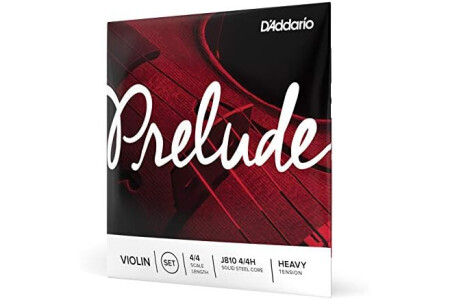
- EDUCATOR’S CHOICE – Designed with quick bow response and ease of use in mind, our violin strings are a unique blend of warm tone, affordability and durability making them ideal for both new and experienced student violinists. - SOLID STEEL CORE – Prelude violin strings are manufactured using a solid steel core for maximum durability and warmest sound. Available in both full and fractional sizes, the Prelude line has an option for any age student. - MADE TO LAST – Solid steel construction and uniquely-designed sealed pouches, Prelude strings have an unparalleled protection from the elements that cause corrosion and are unaffected by temperature and humidity changes. - WARM TONE: Prelude violin strings have the warmest sound available in an affordable, solid steel core string design, making it the educator's preferred choice for student strings due to their unique blend of warm tone, durability, and value. - MADE IN THE USA – All D'Addario strings are designed, engineered and manufactured in the USA to the most stringent quality controls in the industry.
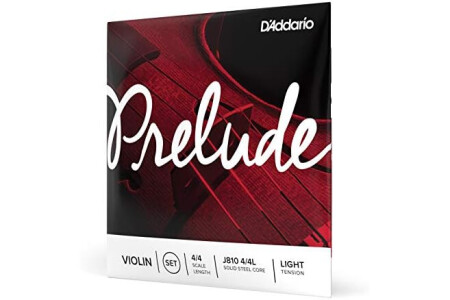
- EDUCATOR’S CHOICE – Designed with quick bow response and ease of use in mind, our violin strings are a unique blend of warm tone, affordability and durability making them ideal for both new and experienced student violinists. - SOLID STEEL CORE – Prelude violin strings are manufactured using a solid steel core for maximum durability and warmest sound. Available in both full and fractional sizes, the Prelude line has an option for any age student. - MADE TO LAST – Solid steel construction and uniquely-designed sealed pouches, Prelude strings have an unparalleled protection from the elements that cause corrosion and are unaffected by temperature and humidity changes. - WARM TONE: Prelude violin strings have the warmest sound available in an affordable, solid steel core string design, making it the educator's preferred choice for student strings due to their unique blend of warm tone, durability, and value. - MADE IN THE USA – All D'Addario strings are designed, engineered and manufactured in the USA to the most stringent quality controls in the industry.
Style: Light Tension Color: 4/4 Scale

BLACK & WHITE VERSION Peercoin (PPC) is a decentralised cryptocurrency similar to Bitcoin. It was the first cryptocurrency to introduce a new form of timestamping (proof of stake) that allows users of the wallet to receive a 1% rate of return on their holdings per year. This book is a detailed history of the first year of Peercoin up to the 19th of August 2013 (the time at which the blockchain had been usable for one year by the general public).

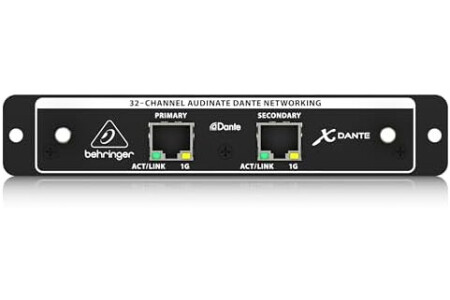
- Interfaz de audio bidireccional de 32 canales y 48 kHz para redes IP Dante* - Transmisión de señal de alta velocidad de 24 bits con sincronización precisa de muestra y baja latencia - Permite la interfaz con infraestructura de red estándar de 100 MBit/s o Gigabit con QoS basada en DSCP - Las velocidades de muestreo y de bits mixtas pueden coexistir en la misma red - Es posible el control remoto completo de X32 utilizando el conmutador Ethernet integrado
Nombre de estilo: X-DANTE Configuración: Upgrade Cards

Ana Obregón, una de las mujeres más queridas y reconocidas de nuestro país, nos ofrece un desgarrador testimonio sobre la pérdida de su hijo Aless Lequio, tras una larga y dura enfermedad. El corazón de este libro es El chico de las musarañas, el texto que Aless empezó a escribir cuando le diagnosticaron cáncer. Un relato sincero, ácido, irónico, vibrante, con un sentido del humor único, que no pudo terminar, y que nos descubre el talento, el carisma y la personalidad de un joven que, sin duda, hubiera triunfado como escritor. A través de estas páginas, Ana se desnuda en un viaje de esperanza, lucha y fuerza, donde muestra un huracán de sentimientos y emociones sin filtro, en el que sumerge al lector en una experiencia inolvidable. La prueba de amor más bonita de una madre, una narración conmovedora, que sobrecogerá y en más de una ocasión despertará una sonrisa cómplice.
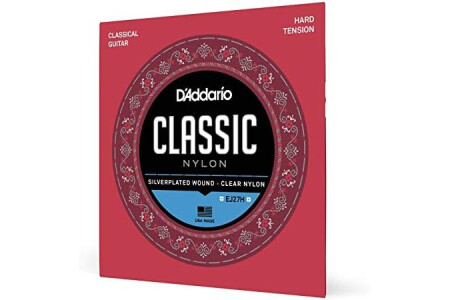
- Perfecto para principiantes: Este juego de cuerdas clásico de nivel básico está diseñado específicamente para guitarristas principiantes con un equilibrio óptimo de calidez y proyección que es perfecto para estudiantes; Ideal para guitarras clásicas y guitaleles. - Tono cálido y duradero: este juego de nylon clásico tiene puntas atadas y contiene 3 agudos de nylon transparente y 3 bajos de nylon de cobre plateado para un tono cálido y duradero. - Cuerdas para todos los estilos: Desde jazz hasta metal pasando por rock, bluegrass, blues, folk y mucho más, fabricamos cuerdas de gran sonido para cada género y nivel, desde principiante hasta profesional, incluyendo cuerdas para bajo, acústicas, clásicas y de 12 cuerdas - Suena mejor, toca mejor: Compra toda nuestra colección de accesorios para guitarra, incluidos tensores, púas, correas, cejillas, afinadores, cables, fundas y estuches, además de cuerdas para banjo, mandolina, ukelele y mucho más. - Fabricadas en EE.UU.: Como el mayor y más respetado fabricante de accesorios musicales del mundo, las cuerdas de guitarra D'Addario se fabrican siguiendo las especificaciones más exigentes en nuestras vanguardistas instalaciones de producción de Nueva York.
Nombre de estilo: Hard Tension, 1-Pack

- Incluye 6 juegos envueltos de forma individual - Las cuerdas Slinky de Ernie Ball son las elegidas por leyendas de la música de todo el mundo como Slash, Jimmy Page, Metallica, Eric Clapton y muchos más - Las preferidas de guitarristas de muchos géneros, el calibre 10-46 de las Regular Slinky se ha convertido en el referente del mundillo - En paquete Element Shield que garantiza que tus cuerdas estarán igual deque cuando se fabricaron - Tono alegre y equilibrado
Color: Regular (10-46) Nombre de estilo: 6 paquetes
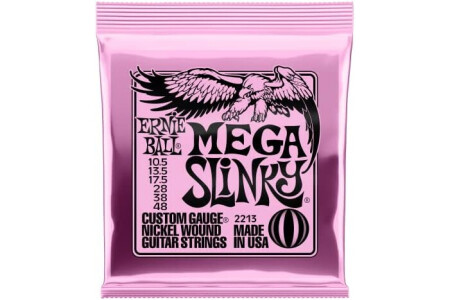
- Las cuerdas Slinky de Ernie Ball son las elegidas por leyendas de la música de todo el mundo como Slash, Jimmy Page, Metallica, Eric Clapton y muchos más. - Las Mega Slinky se parecen a nuestro famoso juego Power Slinky pero con un pelín menos de tensión en las cuerdas más altas. - En paquete Element Shield que garantiza que tus cuerdas estarán igual de nuevas que cuando se fabricaron. - Tono alegre y equilibrado. - Fabricación en California (EE. UU.) con los materiales más recientes y de la mejor calidad.
Color: Mega (10.5-48) Nombre de estilo: 1 paquete
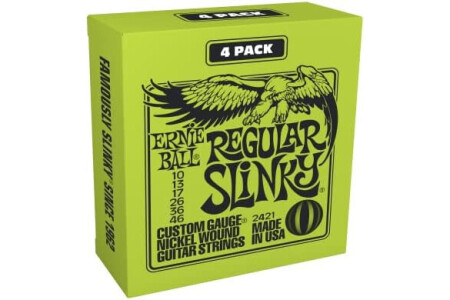
- Incluye 4 juegos envueltos transparentes - Las cuerdas Slinky de Ernie Ball son las elegidas por leyendas de la música de todo el mundo como Slash, Jimmy Page, Metallica, Eric Clapton y muchos más - Las preferidas de guitarristas de muchos géneros, el calibre 10-46 de las Regular Slinky se ha convertido en el referente del mundillo - Tono alegre y equilibrado - Fabricadas en EE. UU. con los materiales más recientes y de calidad
Color: Regular (10-46) Nombre de estilo: 4 paquetes
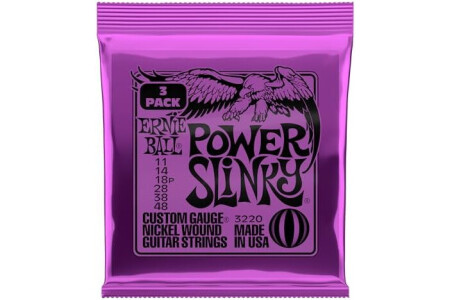
- Incluye 3 juegos envueltos de forma individual - Las cuerdas Slinky de Ernie Ball son las elegidas por leyendas de la música de todo el mundo como Slash, Jimmy Page, Metallica, Eric Clapton y muchos más - El juego Slinky de calibre 11 original de Ernie Ball les ofrece a los guitarristas una cuerda más gruesa que la de un juego de calibre 10 - En paquete Element Shield que garantiza que tus cuerdas estarán igual deque cuando se fabricaron - Tono alegre y equilibrado
Color: Power (11-48) Nombre de estilo: 3 paquetes

There are products from different external stores in your basket, so a wish for each external store will be created.
Note: You will be able to configure each wish individually before publishing it.

 Spanish
(Español)
Spanish
(Español)
 German
(Deutsche)
German
(Deutsche)
 French
(Français)
French
(Français)
 Italian
(Italiano)
Italian
(Italiano)
 Portuguese
(Portugues)
Portuguese
(Portugues)

