

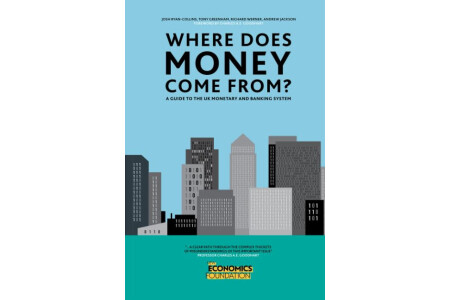
Where Does Money Come From? reveals how, contrary to public perception, the bulk of today's money supply is created and allocated by commercial banks in their role as providers of credit. The authors argue that this system is inherently unstable, with little effective regulation of how much credit is provided or whether it is used for productive or speculative purposes. Based on detailed research and consultation with experts, including from the Bank of England, Where Does Money Come From? reviews theoretical and historical debates on the nature of money and banking and explains the role of the central bank, the Government and the European Union. This Second edition includes new sections on Libor and quantitative easing in the UK and the sovereign debt crisis in Europe. Praise for Where Does Money Come From? “Refreshing and clear. The way monetary economics and banking is taught in many – maybe most - universities is very misleading and what this book does is help people explain how the mechanics of the system work”. David Miles, Monetary Policy Committee, Bank of England “It is amazing that more than a century after Hartley Withers’s The Meaning of Money and 80 years after Keynes’s Treatise on Money, the fundamentals of how banks create money still need to be explained. Yet there plainly is such a need, and this book meets that need, with clear exposition and expert marshalling of the relevant facts. Warmly recommended to the simply curious, the socially concerned, students and those who believe themselves experts, alike. Everyone can learn from it“. Victoria Chick, Emeritus Professor of Economics, University College London. I used Where Does Money Come From? as the core text on my second year undergraduate module in Money and Banking. The students loved it. Not only does it present a clear alternative to the standard textbook view of money, but argues it clearly and simply with detailed attention to the actual behaviour and functioning of the banking system. Highly recommended for teaching the subject. Dr Andy Denis, Director of Undergraduate Studies, Economics Department, City University, London
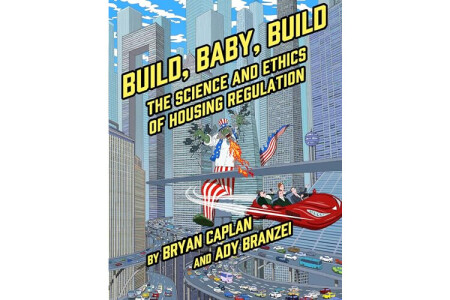
In this exciting new graphic novel, economist Bryan Caplan examines how changes to housing regulation can lead us to a vastly better world. Why are housing prices in America so unbelievably high, especially in the country's most desirable locations? The superficial answer is “supply and demand,” but the deep answer―the reason supply is so low―is a regulatory system that treats developers like criminals. In Build, Baby, Build: The Science and Ethics of Housing Regulation, economist Bryan Caplan makes the economic and philosophical case for radical deregulation of this massive market―freeing property owners to build as tall and dense as they wish. Not only would the average price of housing be cut in half, but the building boom unleashed by deregulation would simultaneously reduce inequality, increase social mobility, promote economic growth, reduce homelessness, increase birth rates, help the environment, cut crime, and more. Combining stunning homage to classic animation with careful interdisciplinary research, Build, Baby, Build takes readers on a grand tour of a bona fide “panacea policy.” We can start realizing these missed opportunities as soon as we abandon the widespread misconception that housing regulation solves more problems than it causes.
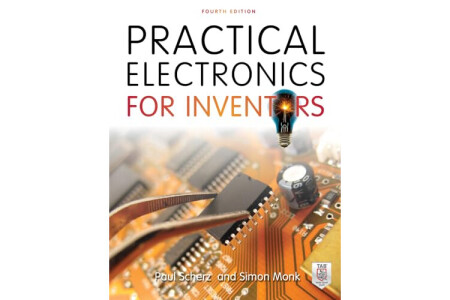
Publisher's Note: Products purchased from Third Party sellers are not guaranteed by the publisher for quality, authenticity, or access to any online entitlements included with the product. A Fully Updated, No Nonsense Guide to Electronics Advance your electronics knowledge and gain the skills necessary to develop and construct your own functioning gadgets. Written by a pair of experienced engineers and dedicated hobbyists, Practical Electronics for Inventors, Fourth Edition, lays out the essentials and provides step by step instructions, schematics, and illustrations. Discover how to select the right components, design and build circuits, use microcontrollers and ICs, work with the latest software tools, and test and tweak your creations. This easy to follow book features new instruction on programmable logic, semiconductors, operational amplifiers, voltage regulators, power supplies, digital electronics, and more. Practical Electronics for Inventors, Fourth Edition, covers: * Resistors, capacitors, inductors, and transformers * Diodes, transistors, and integrated circuits * Optoelectronics, solar cells, and phototransistors * Sensors, GPS modules, and touch screens * Op amps, regulators, and power supplies * Digital electronics, LCD displays, and logic gates * Microcontrollers and prototyping platforms * Combinational and sequential programmable logic * DC motors, RC servos, and stepper motors * Microphones, audio amps, and speakers * Modular electronics and prototypes
In the post-meltdown world, it is irresponsible, ineffective, and ultimately useless to have a serious economic debate without considering and challenging the role of the Federal Reserve. Most people think of the Fed as an indispensable institution without which the country's economy could not properly function. But in End the Fed, Ron Paul draws on American history, economics, and fascinating stories from his own long political life to argue that the Fed is both corrupt and unconstitutional. It is inflating currency today at nearly a Weimar or Zimbabwe level, a practice that threatens to put us into an inflationary depression where $100 bills are worthless. What most people don't realize is that the Fed -- created by the Morgans and Rockefellers at a private club off the coast of Georgia -- is actually working against their own personal interests. Congressman Paul's urgent appeal to all citizens and officials tells us where we went wrong and what we need to do fix America's economic policy for future generations.
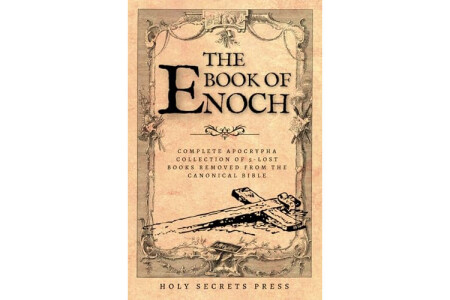
WHAT ARE THE SECRETS CONTAINED IN THE STORY OF THE PROPHET ENOCH? WHY ARE THESE ANCIENT TEXTS OVERLOOKED IN THE CANONICAL VERSION OF THE HOLY BIBLE? DESPITE THEIR FASCINATING DISCOVERY, WHY ARE THEY STILL LITTLE TALKED ABOUT TODAY? QUESTIONS WE ASK OURSELVES TODAY THAT NEED TO BE ANSWERED.... THIS EDITION CONTAINS THE ANECDOTES AND ETHIOPIC WRITINGS OF THE PROPHET ENOCH. THE APOCRYPHAL BOOKS ON GENESIS, HEAVEN, ANGELS AND EVIL, AND THE EVENTS LEADING UP TO THE LAST JUDGMENT ARE NARRATED IN THIS DEUTEROCANONICAL VERSION FROM THE OLD TESTAMENT OF PSEUDEPIGRAPHA. AMONG WHAT ARE THE MISSING TEXTS OF THE BIBLE CALLED “THE DEAD SEA SCROLLS" IS ENOCH'S VERSION AND ITS DEPICTION OF THE DEVELOPMENT OF EARLY CHRISTIAN BELIEFS. INSIDE THIS BOOK YOU WILL FIND THE 5-LOST BOOKS THAT WERE REMOVED IN THE 19TH CENTURY, PLUS THE FRAGMENTS OF THE BOOK OF NOAH ALSO EXCLUDED FROM THE BIBLE: * THE BOOK OF WATCHERS or Ethiopic Book 1 * THE BOOK OF PARABLES or Ethiopic Book 2 * THE BOOK OF THE LUMINARIES OF THE HEAVEN or Astronomy Book (Ethiopic Book 3) * THE BOOK OF DREAM AND VISION or Ethiopic Book 4 * THE EPISTLE OF ENOCH or Ethiopic Book 5 but not only... Also reported and translated the dedicated in-depth section with fragments from the Book of Noah… This work contains illustrations and a guide to studying and reading. We gratify ourselves for the work done with the knowledge that we are bearing witness to the great hidden texts that the great translators and apostles did before us. The work done is to simplify the ancient translations of Jewish and Christian history and give an opinion piece to those interested in studying the documents. THIS EDITION ALSO INCLUDES ANNOTATIONS AND ILLUSTRATIONS THAT WE HAVE INCLUDED TO: * EXPLAIN the historical context * GUIDE the reading of the translated text * CLARIFY the origins of the finding of the " Dead Sea Scrolls" If you are curious and interested in learning more about the Prophet Enoch's narrative and you want to discover the events that have marked Christian origins since the beginning of time…. ...then this book will clarify you why it is part, today, of the texts that have been omitted and what it tells differently. GET This Volume NOW to discover and read the annotated edition from Holy Secrets Press.

In 1896, Sigmund Freud presented his revolutionary “seduction theory,” arguing that acts of sexual abuse and violence inflicted on children are the direct cause of adult mental illness. Nine years later, Freud completely reversed his position, insisting that these sexual memories were actually fantasies that never happened. Why did Freud retract the seduction theory? And why has the psychoanalytic community gone to such lengths to conceal that retraction? In this landmark book, drawing on his unique access to formerly sealed and hidden papers, Jeffrey Moussaieff Masson dares to uncover the truth about this critical turning point in Freud’s career and its enduring impact on the theory and practice of psychoanalysis. The Assault on Truth reveals a reality that neither Freud nor his followers could bear to face. Bracing in its honesty, gripping in its revelations, this is the book that prompted Masson’s break with the psychoanalytic community—and launched his subsequent brilliant career as an independent thinker and writer.
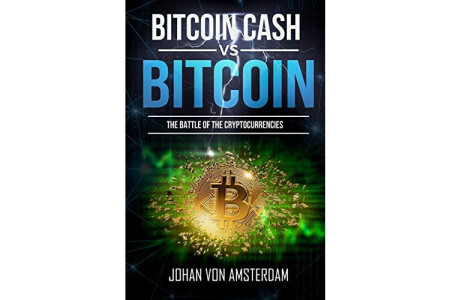
Bitcoin Cash vs Bitcoin The battle of the cryptocurrencies * Do you know the difference between Bitcoin and Bitcoin Cash? * Which one is the most future proof? * If you have bitcoin do you have Bitcoin Cash? * Which exchanges support it? 2017 witnessed an important date in the history of cryptocurrency: the split that has created Bitcoin (BTC) and Bitcoin Cash (BCH). Once a unified currency, Bitcoin now has new competition from a twin brother, Bitcoin Cash, which is leaving even the savviest of investors questioning what the difference really is and which is better. An essential guide for any cryptocurrency investor, this book will address the major questions about this split and then look to the future for answers about what’s next. A simple walk through a complicated minefield, you will discover Bitcoin’s exciting history, the hidden features, and the most important underlying principles of this type of investing. Get Answers to Questions Like: * Where did Bitcoin come from? * What exactly is Bitcoin Cash? * What is the best investment? * What does the future hold? * How do I get started? * Where to buy it? * How to store? Solve the mystery between cryptocurrency’s major split and learn how to make smart investments with BTC and BCH. It’s time to enter the fascinating world of Bitcoin Cash Don't wait scroll up and add to cart .
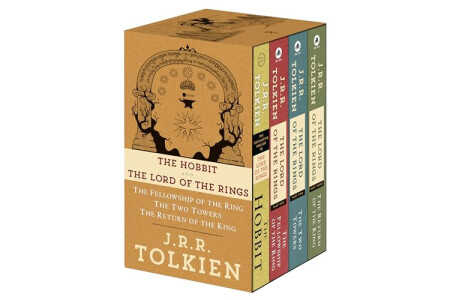
NATIONAL BESTSELLER • The complete four-book boxed set of the greatest fantasy epic of all time: The Lord of the Rings and its enchanting prequel, The Hobbit When Thorin Oakenshield and his band of dwarves embark upon a dangerous quest to reclaim the hoard of gold stolen from them by the evil dragon Smaug, Gandalf the wizard suggests an unlikely accomplice: Bilbo Baggins, an unassuming Hobbit dwelling in peaceful Hobbiton. Along the way, the company faces trolls, goblins, giant spiders, and worse. But as they journey from the wonders of Rivendell to the terrors of Mirkwood and beyond, Bilbo will find that there is more to him than anyone—himself included—ever dreamed. Unexpected qualities of courage and cunning, and a love of adventure, propel Bilbo toward his great destiny . . . a destiny that waits in the dark caverns beneath the Misty Mountains, where a twisted creature known as Gollum jealously guards a precious magic ring. This boxed set includes: THE HOBBIT THE FELLOWSHIP OF THE RING THE TWO TOWERS THE RETURN OF THE KING

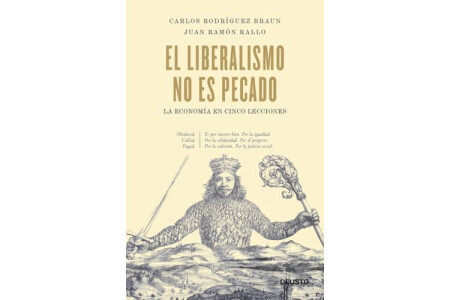
Carlos Rodríguez Braun y Juan Ramón Rallo defienden el liberalismo rebatiendo los argumentos de sus fustigadores. Por ejemplo: la crisis la provocó la liberalización y la desregulación; no manda la política, mandan los mercados; toda reducción del Estado del Bienestar atenta contra las conquistas sociales; los especuladores desestabilizan la economía y generan las burbujas; el Estado puede organizar la economía con efi cacia y equidad; si el intervencionismo es malo, el liberalismo también lo es, y por lo tanto lo correcto es buscar un punto de equilibrio entre ambos. Las cinco lecciones de economía que componen este libro refutan los tópicos del pensamiento único, constituyen un manual para no iniciados en la materia y, a la vez, una invitación a refl exionar sobre las críticas al capitalismo y al mercado libre. En esta obra, amena y provocadora, los autores rechazan la creciente intromisión del Estado, la coacción y la intimidación del poder, así como su constante empeño en recortar los derechos de los ciudadanos, alegando que él sí sabe lo que mejor conviene a sus súbditos. Esa soberbia de las autoridades, esa prepotencia de los poderosos, esa pasión por controlar, asustar, imponer, prohibir, vigilar, multar, recaudar… Eso, concluyen, sí es pecado.
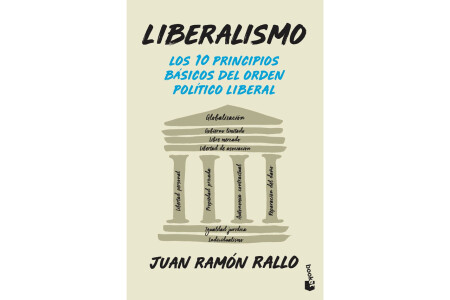
Qué es y qué defiende el liberalismo. El concepto «liberalismo» aparece de manera cotidiana en las conversaciones y debates. Pero su significado e implicaciones pueden no ser evidentes e incluso resultar engañosos. ¿El liberalismo supone estar a favor de una fiscalidad reducida? ¿O hace referencia a un conjunto de ideas progresistas en asuntos como la religión, las drogas, la eutanasia o la sexualidad? ¿Está a favor de las grandes empresas y de sus conexiones con el poder político o justo de lo contrario? ¿Ser liberal significa mostrarse partidario del derecho a la autodeterminación de los pueblos, de la unidad de las naciones históricas o de ninguno de estos conceptos? ¿O acaso el liberalismo equivale simplemente a la defensa de un sistema democrático similar al actual? En este libro, Juan Ramón Rallo expone cuáles son los diez principios del liberalismo para así clarificar su significado actual. Según el autor, el liberalismo es una filosofía política minimalista que no pretende establecer de manera rígida lo que está bien y lo que está mal, sino que únicamente aspira a descubrir cuál es el marco jurídico necesario para que cada uno pueda vivir su propia vida sin más limitación que la de respetar a los demás.
Aunque la historia que narra no es original de William Shakespeare, el genial dramaturgo británico supo elevarla a la categoría de mito y arquetipo. Romeo y Julieta es la más célebre tragedia escrita por el autor, que se ha ganado el corazón de generaciones enteras de espectadores y lectores. El amor imposible entre Romeo Montesco y Julieta Capuleto debido a viejas rencillas familiares sigue emocionando, y el desenlace, por truculento que sea y conocido que resulte, aún nos conmueve.
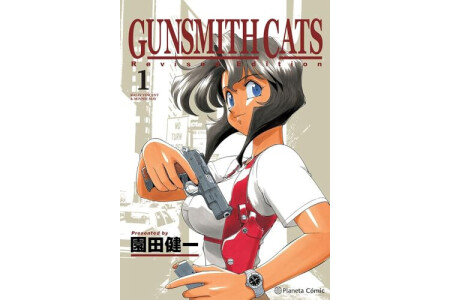
¡Vuelve este clásico del manga! Rally y Minnie se ocupan en el día a día de llevar una armería en Chicago... ¡Pero también se dedican a la caza de recompensas! Su tarea principal es la persecución de forajidos sobre cuya cabeza pesa una recompensa. Sin embargo, de algún modo siempre acaban aceptando trabajos arriesgados y metiéndose en líos considerables.

There are products from different external stores in your basket, so a wish for each external store will be created.
Note: You will be able to configure each wish individually before publishing it.

 Spanish
(Español)
Spanish
(Español)
 German
(Deutsche)
German
(Deutsche)
 French
(Français)
French
(Français)
 Italian
(Italiano)
Italian
(Italiano)
 Portuguese
(Portugues)
Portuguese
(Portugues)

