

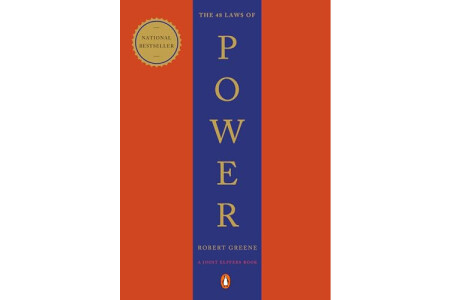
Amoral, cunning, ruthless, and instructive, this multi-million-copy New York Times bestseller is the definitive manual for anyone interested in gaining, observing, or defending against ultimate control – from the author of The Laws of Human Nature. This is the only authorized paperback edition in the US. In the book that People magazine proclaimed “beguiling” and “fascinating,” Robert Greene and Joost Elffers have distilled three thousand years of the history of power into 48 essential laws by drawing from the philosophies of Machiavelli, Sun Tzu, and Carl Von Clausewitz and also from the lives of figures ranging from Henry Kissinger to P.T. Barnum. Some laws teach the need for prudence (“Law 1: Never Outshine the Master”), others teach the value of confidence (“Law 28: Enter Action with Boldness”), and many recommend absolute self-preservation (“Law 15: Crush Your Enemy Totally”). Every law, though, has one thing in common: an interest in total domination. In a bold and arresting two-color package, The 48 Laws of Power is ideal whether your aim is conquest, self-defense, or simply to understand the rules of the game.
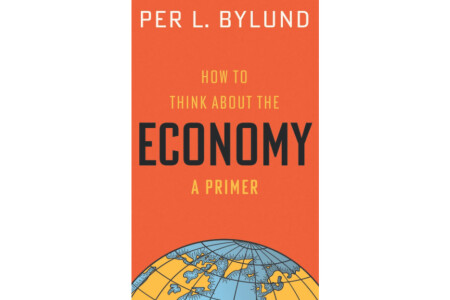
This little book was written to accomplish something big: economic literacy. It is intentionally kept very short to be inviting rather than intimidating. You will gain life-changing understanding of how the economy works in practically no time. Per Bylund will make you excited about what economics has to offer. Because economic literacy is mind-opening. Sound economic reasoning is an enormously powerful tool for understanding both the economy and society. Economic literacy uncovers what is going on under the surface and why things work out as they do. There is no magic to it. In fact, economic literacy is necessary to properly understand the world. Short, direct, axiomatically unassailable, and devastating to the mythology of modern economics. This book not only promote Mises' views, but refutes and attacks the tragicomic orthodoxy of today’s economics mainstream.

Applied Austrian economics doesn't get better than this. Murray N. Rothbard's America's Great Depression is a staple of modern economic literature and crucial for understanding a pivotal event in American and world history. Rothbard opens with a theoretical treatment of business cycle theory, showing how an expansive monetary policy generates imbalances between investment and consumption. He proceeds to examine the Fed's policies of the 1920s, demonstrating that it was quite inflationary even if the effects did not show up in the price of goods and services. The stock-market correction was merely one symptom of the investment boom that led inevitably to a bust. The Great Depression was not a crisis for capitalism but merely an example of the downturn part of the business cycle, which in turn was generated by government intervention in the economy. Had this book appeared in the 1940s, it might have spared the world much grief. Even so, its appearance in 1963 meant that free-market advocates had their first full-scale treatment of this crucial subject. The damage to the intellectual world inflicted by Keynesian- and socialist-style treatments would be limited from that day forward. Since the book's first edition, it has been the definitive treatment of the causes of the depression. It remains canonical today because the debate is still very alive.
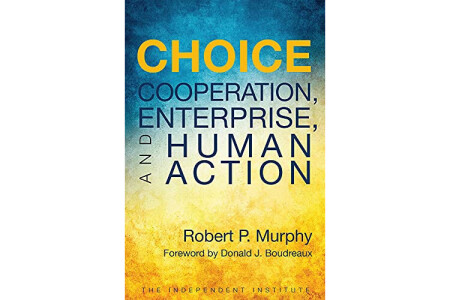
Unlike what usually passes for economics in many classrooms, government, the media and elsewhere, Choice is an engaging and intriguing book that provides something quite unique: a genuine treatise on economics that instructs and entertains both economists and general readers. Drawing on the seminal volume by the “Austrian School” economist Ludwig von Mises, Human Action, and comparing classical and neoclassical approaches, Choice is a creative, comprehensive, and unusually lucid book on economic science and market processes. The book illuminates free economies as underpinning civilization, the folly of government central planning, the primacy of entrepreneurship and innovation, the nature of money and banking, the causes of the business cycle, the failures of government intervention, and more. As a result, Choice teaches economic principles and exposes economic fallacies, and any reader will learn both the important truths about economics and the crucial value of individual choice, entrepreneurship, and free markets.
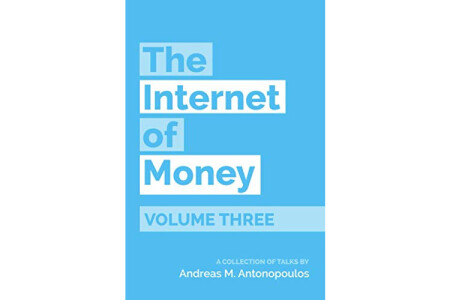
While many books explain the ‘how’ of Bitcoin, The Internet of Money series delves into the ‘why’ of Bitcoin. Following the world-wide success of Volume One and Volume Two, this third installment contains 12 of his most inspiring and thought-provoking talks over the past two years, including:Universal Access to Basic FinanceMeasuring Success: Price or PrincipleEscaping the Global Banking CartelLibre Not LibraUnstoppable Code: The Difference Between Can’t and Won’tAround the world, governments and corporations are increasingly pursuing a reconstruction of money as a system-of-control and surveillance machine. Despite the emergence of an interconnected global society and economy through the decades-long expansion of the internet, the trajectory of these bureaucratic policies foreshadows dire consequences for financial inclusion and independence.Andreas contextualizes the significance of Bitcoin and open blockchains amid these socio-political and economic shifts: What if money could be created without an authority? Are corporate coins the first step towards techno neo-feudalism? Is the real “darknet” run by state intelligence agencies? What if everyone could have a Swiss bank in their pocket? Can we build digital communities resistant to gentrification?In 2013, Andreas M. Antonopoulos started publicly speaking about Bitcoin and quickly became one of the world's most sought-after speakers in the industry. He has delivered dozens of unique TED-style talks in venues ranging from the Henry Ford Museum to booked-out meetups in the Czech Republic and Argentina.In 2014, Antonopoulos authored the groundbreaking book, Mastering Bitcoin (O’Reilly Media), widely considered to be the best technical guide ever written about the technology. On 7 September 2016, Andreas launched his second book, The Internet of Money Volume One, on The Joe Rogan Experience podcast (the interview has since been viewed more than 300,000 times).The Internet of Money offered something that was desperately needed: an explanation of the philosophy, economics, politics, and poetics behind this technology.Make this book part of your collection and see why the internet of money will continue to transform the world and the internet itself.
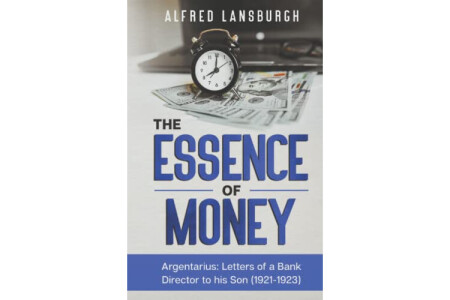
What is money? How does it work, and what effects does it have on our society and economy? Hardly anyone has penetrated the answers to these questions better and explained them more comprehensibly than Alfred Lansburgh, who published them in the form of letters to his son, under the pseudonym “Argentarius” in his publishing house “Die Bank”. This edition contains the following collections of letters from the years 1921 to 1923: * On Money * Valuta * The Central Bank * Monetary Crisis
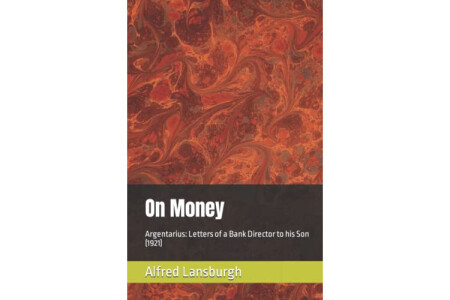
What is money? How does it work and what effects does it have on our society and economy? Hardly anyone has penetrated the answers to these questions better and explained them more comprehensibly than Alfred Lansburgh, who published them in the form of letters to his son, under the pseudonym "Argentarius" in his publishing house "Die Bank". This edition contains the following collections of letters from the years 1921: On Money (Original "Vom Gelde")
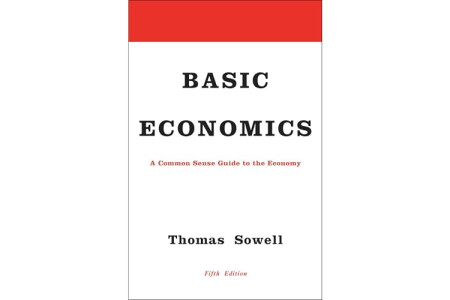
The bestselling citizen’s guide to economics “Thomas Sowell is the nation’s greatest living economist.” —American Spectator Basic Economics is a citizen’s guide to economics, written for those who want to understand how the economy works but have no interest in jargon or equations. Bestselling economist Thomas Sowell explains the general principles underlying different economic systems: capitalist, socialist, feudal, and so on. In readable language, he shows how to critique economic policies in terms of the incentives they create, rather than the goals they proclaim. With clear explanations of the entire field, from rent control and the rise and fall of businesses to the international balance of payments, this is the first book for anyone who wishes to understand how the economy functions. Drawing on lively examples from around the world and from centuries of history, Sowell explains basic economic principles for the general public in plain English.
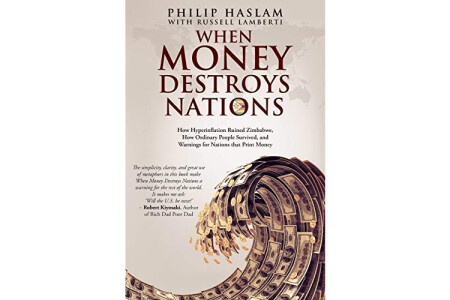
The collapse of the Zimbabwe dollar in 2009 after years of rampant money printing is a frightening example of what lies in store for countries that resort to printing money to pay national debts, bail out banks and oligarchs, and enrich political elites. When Money Destroys Nations tells the gripping story of the disintegration of the once thriving Zimbabwean economy and the inspiring and tragic accounts of how ordinary people survived in turbulent circumstances. Philip Haslam and Russell Lamberti give a straightforward and revealing account of the causes and consequences of Zimbabwe's hyperinflation. Countries around the world are resorting to money printing with their stimulus packages and quantitative easing. Zimbabwe's economic collapse is not an isolated tragedy. It holds lessons for all countries and for all political leaders tempted to take illusory and perilous shortcuts to prosperity. Zimbabwe's lessons must not be ignored. This is the story of When Money Destroys Nations. "Haslam and Lamberti have produced a fascinating, accessible account of how Zimbabweans actually lived (and died) during the world's second-highest hyperinflation..." - Professor Steve H. Hanke, Johns Hopkins University

In responding to the financial crash of 2008, both the Bush Administration and the Obama Administration have relied on prescriptions developed by John Maynard Keynes, the most important economist since Marx. But should we be relying on Keynes? What did Keynes actually say? Did he make his case? Hunter Lewis concludes that he did not. If Keynes was wrong then so are the economic policies of virtually all world governments today.
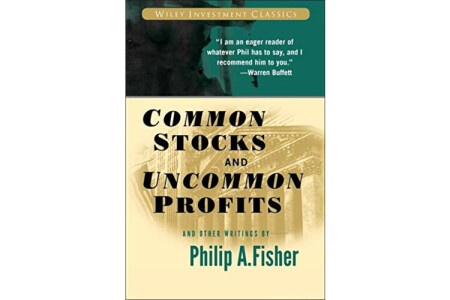
Widely respected and admired, Philip Fisher is among the most influential investors of all time. His investment philosophies, introduced almost forty years ago, are not only studied and applied by today's financiers and investors, but are also regarded by many as gospel. This book is invaluable reading and has been since it was first published in 1958. The updated paperback retains the investment wisdom of the original edition and includes the perspectives of the author's son Ken Fisher, an investment guru in his own right in an expanded preface and introduction "I sought out Phil Fisher after reading his Common Stocks and Uncommon Profits...A thorough understanding of the business, obtained by using Phil's techniques...enables one to make intelligent investment commitments." ―Warren Buffet
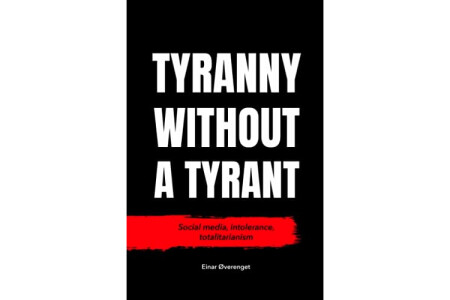
Social media is changing the community. Several may speak up, but under such apparent freedom of expression, an undercurrent of conformity, obedience, self-censorship, and fear dominates. This is how tolerance turns into intolerance and political freedom into totalitarianism. Distinctive attitudes and individuality are replaced by group affiliation, where those who think differently are ostracized. We sense something disturbing: A community moving toward greater control. And a growing risk of politics with totalitarian features that, instead of fighting for freedom, wants to curtail it.

There are products from different external stores in your basket, so a wish for each external store will be created.
Note: You will be able to configure each wish individually before publishing it.

 Spanish
(Español)
Spanish
(Español)
 German
(Deutsche)
German
(Deutsche)
 French
(Français)
French
(Français)
 Italian
(Italiano)
Italian
(Italiano)
 Portuguese
(Portugues)
Portuguese
(Portugues)

