

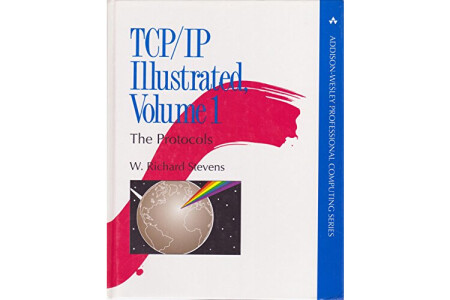
Finally, programmers that need to truly understand the TCP/IP protocol suite have a resource to turn to, TCP/IP Illustrated. Instead of merely describing the RFC's, bestselling author Rich Stevens takes an innovative "visual" approach which, combined with his writing style, results in an accessible "understandable" guide to TCP/IP.

“It’s a seemingly impossible task to select the best of Ludwig von Mises (1881-1973) whose teaching and writing career spanned six decades and whose literary output includes several mighty and timeless treatises on political economy. They were not written in isolation from the real and often horrifying events of the 20th century; they were heavily informed by the brilliance and tragedy of his life experiences – including as a refugee forced to flee his home in Vienna – in battling every form of totalitarianism. I’ve been reading his work since the dawn of my intellectual consciousness but I’ve yet to discover the end of his capacity to illuminate the world around us. I never fail to profit from re-reading even the books I think I understand best. Learning from Mises is a lifelong project. Even so, these five essays carry amazing power, as you will soon discover.” ~ Jeffrey Tucker, Editorial Director, American Institute for Economic Research Ludwig Heinrich Edler von Mises (1881-1973) was an economist, historian, and philosopher. Mises wrote and lectured extensively on behalf of the market order and is best known for his 1949 book Human Action. Mises worked and taught in Vienna until he was driven out by the Nazi movement in 1934. He took sanctuary in Geneva until 1940, immigrated to the United States, and eventually taught at New York University. Mises’s colleague Friedrich Hayek viewed Mises as one of the major figures in the revival of liberalism in the post-war era. Mises’s Private Seminar in Vienna was a formative event for many social scientists of the period, and many of its alumni, including Hayek and Oskar Morgenstern, emigrated from Austria to the United States and Great Britain.
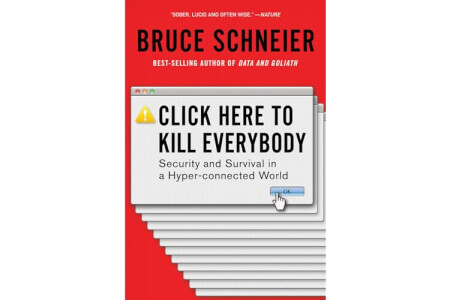
"Sober, lucid and often wise." ―Nature The Internet is powerful, but it is not safe. As "smart" devices proliferate the risks will get worse, unless we act now. From driverless cars to smart thermostats, from autonomous stock-trading systems to drones equipped with their own behavioral algorithms, the Internet now has direct effects on the physical world. Forget data theft: cutting-edge digital attackers can now literally crash your car, pacemaker, and home security system, as well as everyone else’s. In Click Here to Kill Everybody, best-selling author Bruce Schneier explores the risks and security implications of our new, hyper-connected era, and lays out common-sense policies that will allow us to enjoy the benefits of this omnipotent age without falling prey to the consequences of its insecurity.

The revolutionary literary vision that sowed the seeds of Objectivism, Ayn Rand's groundbreaking philosophy, and brought her immediate worldwide acclaim. This modern classic is the story of intransigent young architect Howard Roark, whose integrity was as unyielding as granite...of Dominique Francon, the exquisitely beautiful woman who loved Roark passionately, but married his worst enemy...and of the fanatic denunciation unleashed by an enraged society against a great creator. As fresh today as it was then, Rand’s provocative novel presents one of the most challenging ideas in all of fiction—that man’s ego is the fountainhead of human progress... “A writer of great power. She has a subtle and ingenious mind and the capacity of writing brilliantly, beautifully, bitterly...This is the only novel of ideas written by an American woman that I can recall.”—The New York Times

Look at these mamas and their babies in a book that’s indestructible! Who snuggles in the sunshine? Mama kangaroo and her joey! Who swims side by side? Mama duck and her duckling! Who hugs in the moonlight? Mama and her owlet! Indestructibles is the trusted series for easing little ones into story time. Beloved by babies and their parents, Indestructibles are built for the way babies “read” (i.e., with their hands and mouths) and are: * Rip Proof—made of ultra-durable tight-woven material * Waterproof—can be chewed on, drooled on, and washed! * Emergent Literacy Tool—bright pictures and few or no words encourage dialogic reading * Portable—lightweight books can go anywhere, perfect for the diaper bag and for travel * Safe for Baby—meets ASTM safety standards

******NOW UPDATED – April 22nd Edition****** This is the new, revised, and enhanced edition of the Ethiopian Bible – Sacred Books Beyond the Canon. Based on valuable reader feedback, we have completely reformatted and improved the content for better readability, deeper clarity, and higher quality. Please note: any negative reviews reflect earlier versions of this work, not the current edition. From today, April 22nd, this volume represents a refined and expanded version, with modernized language, corrected structure, and a spiritual presentation faithful to the Ethiopian tradition. Inside you will find: * Modern English versions of sacred Ethiopian texts * Complete books like 1 Enoch, Jubilees, Meqabyan I–III, Psalms of Solomon, and more * Restored apostolic writings like 1 & 2 Clement and the Didascalia * A bonus QR code to access additional canonical resources online 📖 Ethiopian Bible in English Complete LARGE PRINT with Apocrypha & Sacred Ethiopian Scriptures ✨ Explore One of the Oldest and Most Complete Bibles in History! ✨ The Ethiopian complete Bible is one of the oldest, most complete, and unique biblical collections in the world. Unlike Western Bibles, it contains 88 books, including the Apocrypha and other sacred Ethiopian scriptures preserved for centuries. Now available in English, this unabridged edition allows readers to experience the Ethiopian Scriptures like never before! 📜 What Makes This Bible Unique? ✅ Complete 88 Book Collection – Includes the Apocrypha and rare sacred Ethiopian texts. ✅ Authentic Ethiopian Orthodox Canon – Preserved for generations in Ethiopian Christianity. ✅ Ancient Scriptures Restored – Discover lost biblical texts that provide deep historical and theological insights. ✅ A Must-Have for Scholars & Believers – Perfect for those seeking a broader biblical perspective beyond the Western canon. This is not just another Bible—it’s the most complete Ethiopian Bible in English Complete large print edition, featuring 88 books, 🔹 The Bible as it was meant to be – Discover scriptures kept intact for centuries. 🔹 Lost books, lost wisdom – Insights into early Christianity and ancient Jewish traditions. 🔹 Perfect for study & devotion – Essential for scholars, believers, and history enthusiasts. 📖 Perfect for: ✔ Bible scholars and historians exploring early Christianity. ✔ Christian believers seeking a more complete biblical understanding. ✔ Students of religion and theology interested in ancient sacred texts. ✔ Collectors of rare and historic biblical texts. 📚Ethiopian bible in english complete large print This Complete 88 Book Large Print Edition in English is the most accurate and accessible version available today.
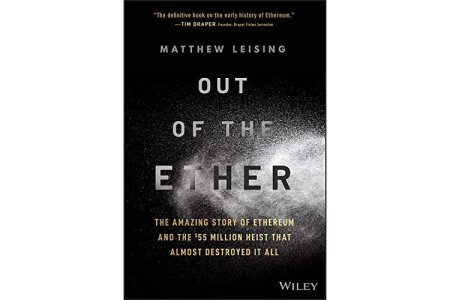
Discover how $55 million in cryptocurrency vanished in one of the most bizarre thefts in history Out of the Ether: The Amazing Story of Ethereum and the $55 Million Heist that Almost Destroyed It All tells the astonishing tale of the disappearance of $55 million worth of the cryptocurrency ether in June 2016. It also chronicles the creation of the Ethereum blockchain from the mind of inventor Vitalik Buterin to the ragtag group of people he assembled around him to build the second-largest crypto universe after Bitcoin. Celebrated journalist and author Matthew Leising tells the full story of one of the most incredible chapters in cryptocurrency history. He covers the aftermath of the heist as well, explaining the extreme lengths the victims of the theft and the creators of Ethereum went to in order to try and limit the damage. The book covers: * The creation of Ethereum * An explanation of the nature of blockchain and cryptocurrency * The activities of a colorful cast of hackers, coders, investors, and thieves Perfect for anyone with even a passing interest in the world of modern fintech or daring electronic heists, Out of the Ether is a story of genius and greed that’s so incredible you may just choose not to believe it.
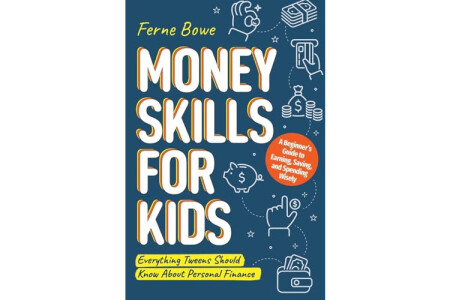
ESSENTIAL MONEY SKILLS EVERY KID SHOULD KNOW! Are you looking for a gift that will entertain your child and empower them with valuable life skills? WELL, LOOK NO FURTHER! "Money Skills for Kids," by Ferne Bowe (author of "Money Skills for Teens" and "Life Skills for Tweens"), is the book you've been searching for. Packed with practical advice, real-life examples, and interactive activities, it is designed to make the complex world of understanding money fun, accessible and engaging. Perfect for kids aged 8 to 13, this book is an educational tool - that takes the reader on the journey through the maze of money management, transforming them into savvy savers and wise spenders. READY TO START THE JOURNEY INTO THE WORLD OF MONEY? HERE'S A SNEAK PEEK AT WHAT'S INSIDE: * Unravel the mystery of earning and spending money wisely. * Learn how to transform a brilliant money-making idea into reality. * Master the art of saving with easy and effective strategies. * Take the first step in banking by choosing and opening a savings account. * Set and achieve financial goals like a pro. * Learn the crucial difference between needs and wants. * Dip your toes into the fascinating world of investing. And that's just the beginning! Every chapter is a stepping stone towards becoming financially independent. GIVE THEM THE GIFT OF MONEY SKILLS! Prepare your child for a future where money is a tool, not a challenge. Help them on their journey towards confidence, independence, and smart financial decisions. Click 'Add to Cart' now and set your child on the path to financial success.
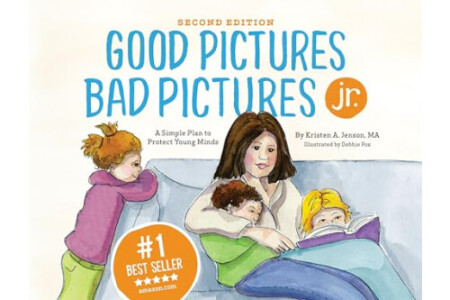
All new second edition: Young children deserve to be armed early against internet dangers. Good Pictures Bad Pictures Jr. makes it easy for parents to protect their young kids ages 3 to 8. Using gentle, age-appropriate messages, children will learn to Turn, Run & Tell when they are accidentally exposed to inappropriate content. Written by best-selling author Kristen A. Jenson of the original Good Pictures Bad Pictures book, the Jr. version is a comfortable, effective way for proactive parents to empower their young kids with their first internal filter! REVIEWS: “It’s never too early to start teaching kids healthy media habits! Reading Good Pictures Bad Pictures Jr. to your young children is a beautiful way to empower them to make safe internet choices.” Sean Covey, Executive Vice President FranklinCovey Co. and international bestselling author of The 7 Habits of Highly Effective Teens "Our kids deserve to be warned about the very real dangers of pornography in a simple way they can understand. As a mom of two preschoolers growing up in a digital world, I am thrilled to recommend Good Pictures Bad Pictures Jr.!. We loved the hidden cameras inside!" Dawn Hawkins, VP & Executive Director, National Center on Sexual Exploitation "For the sake of the children, I wholeheartedly recommend Good Pictures Bad Pictures Jr. As a grandfather, father and pastor, I can think of no better gift for a child than the ability to reject pornography. Our kids’ future marriages depend on it."Josh McDowell, Josh McDowell Ministries "Earlier is definitely better when it comes to arming children against pornography. This is a beautiful way to begin protecting your youngest children without jeopardizing their innocence. Get it! Share it!” Matt Fradd, Director at Integrity Restored, Speaker, Author, parent
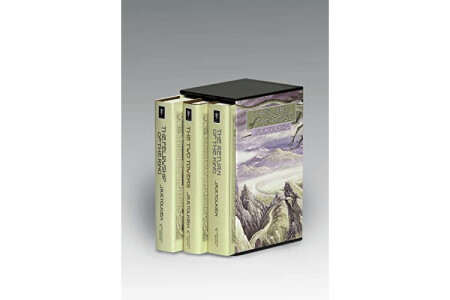
Immerse yourself in Middle-earth with J.R.R. Tolkien’s classic high fantasy masterpieces behind the films... The three volumes that make up J.R.R. Tolkien's epic classic The Lord of the Rings are here presented in beautiful cloth editions, including large format fold-out maps of Middle-earth at the end of the Third Age, as well an extensive appendices. This complete box set contains The Fellowship of the Ring, The Two Towers, and The Return of the King, with jackets and a box designed by celebrated Tolkien illustrator Alan Lee. One Ring to rule them all, One Ring to find them, One Ring to bring them all and in the darkness bind them. This landmark of epic fantasy, The Lord of the Rings, tells of the great quest undertaken by Frodo and the Fellowship of the Ring: Gandalf the Wizard; the hobbits Merry, Pippin, and Sam; Gimli the Dwarf; Legolas the Elf; Boromir of Gondor; and a tall, mysterious stranger called Strider. This complete three-volume box set is the perfect way to experience the entire legendary saga: * An Epic Quest: Follow the hobbit Frodo Baggins as he and his companions undertake a perilous journey to destroy the One Ring and save Middle-earth from the Dark Lord Sauron. * A Timeless Fellowship: Join an unforgettable band of heroes, from Gandalf the Wizard and Legolas the Elf to Gimli the Dwarf and the mysterious Strider, as they unite to protect the Ring-bearer. * Legendary World-Building: Explore the vast and detailed landscape of Middle-earth, brought to life with large format fold-out maps and extensive appendices included in the books. * The Ultimate Collector's Edition: This beautifully designed cloth-bound box set features the complete trilogy―The Fellowship of the Ring, The Two Towers, and The Return of the King―with iconic jacket art by celebrated illustrator Alan Lee.

The third entry into the New York Times bestselling series, To Challenge Heaven brings another thrilling adventure from the masters of military science fiction, David Weber and Chris Kennedy. In a universe teeming with predators, humanity needs friends. And fast. We've come a long way in the forty years since the Shongairi attacked Earth, killed half its people, and then were driven away by an alliance of humans with the other sentient bipeds who inhabit our planet. We took the technology they left behind, and rapidly built ourselves into a starfaring civilization. Because we haven't got a moment to lose. Because it's clear that there are even more powerful, more hostile aliens out there, and Earth needs allies. But it also transpires that the Shongairi expedition that nearly destroyed our home planet ... wasn't an official one. That, indeed, its commander may have been acting as an unwitting cats-paw for the Founders, the ancient alliance of very old, very evil aliens who run the Hegemony that dominates our galaxy, and who hold the Shongairi, as they hold most non-Founder species, in not-so-benign contempt. Indeed, it may turn out to be possible to turn the Shongairi into our allies against the Hegemony. There's just the small matter of the Shongairi honor code, which makes bushido look like a child's game. We might be able to make them our friends -- if we can crush their planetary defenses in the greatest battle we, or they, have ever seen...

If you're exhausted, overwhelmed, and tired of holding everything together, this two-book collection takes you from burnout to emotional regulation. The Burnt-Out & Regulated Bitch includes the first two books in The Regulated Woman Series in one volume: • The Burnt-Out Bitch — Understand the burnout, perfectionism, people-pleasing, and emotional overload keeping you stuck in survival mode. • The Regulated Bitch — Learn how to calm your nervous system, manage emotional reactions, set healthier boundaries, and respond to life with more clarity and control. Together, you'll learn how to recognize the patterns that are wearing you down, stop putting impossible pressure on yourself, and build emotional regulation skills that work in real life. Burnout → Awareness → Regulation → Rebuilding Includes access to companion workbook tools. The Regulated Woman Series continues with The People-Pleasing Bitch. Two books. One volume. Start breaking the cycle.

There are products from different external stores in your basket, so a wish for each external store will be created.
Note: You will be able to configure each wish individually before publishing it.

 Spanish
(Español)
Spanish
(Español)
 German
(Deutsche)
German
(Deutsche)
 French
(Français)
French
(Français)
 Italian
(Italiano)
Italian
(Italiano)
 Portuguese
(Portugues)
Portuguese
(Portugues)

